
Fishing forecast in London
London has three kinds of water inside the same city. The Thames runs through the middle of it, tidal for most of that length. The Lea comes down the eastern edge as a navigation with locks. And the canals thread the whole place together. The forecast below tells you which day to pick; the water type tells you what to expect when you get there.
Get the FisHub fishing forecast for London and prepare for your trip in advance. We factor in the weather and give you a forecast several days ahead, so you can plan your fishing.
Today's bite forecast has not been generated yet, please check back later.
Where to fish in London
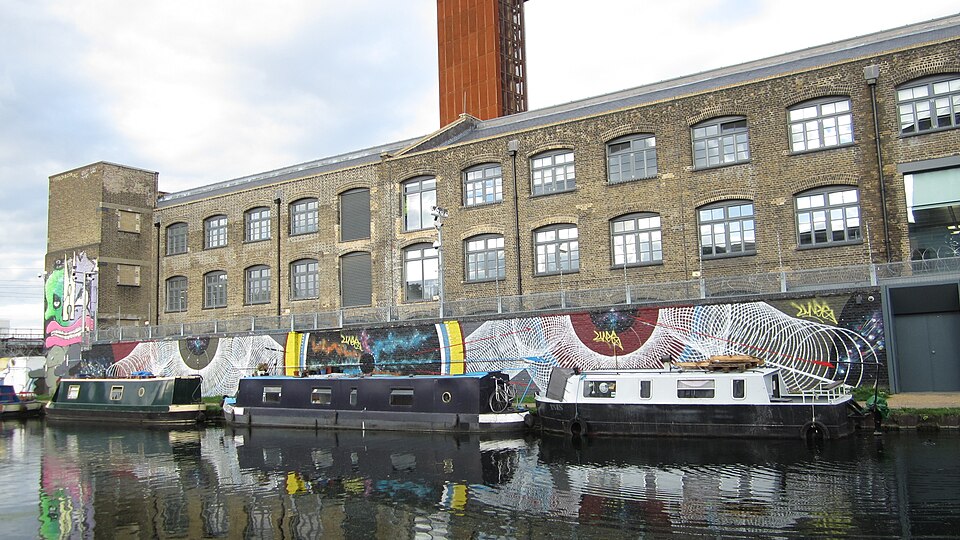
The obvious water is the Thames, which crosses the whole city and is tidal for most of its London length. Along the eastern side runs the Lea, canalised as the Lea Navigation and quieter than the main river. Threading between them are the Regent's Canal and the Grand Union Canal.
Those four cover very different fishing. The Thames moves, drops and refills twice a day below Teddington. The Lea Navigation behaves like a slow stillwater with a tow. The canals are shallow, narrow and clear enough to spot fish in, and they hold carp that get very used to people.
One caveat that matters more in England than anywhere else on this site: none of this water is publicly fishable by default. There is no state register of fishing waters in England, and the right to fish belongs to clubs, private fisheries and landowners. This page names the water as geography, not as a place you may turn up and cast into. You need permission from whoever holds the fishery, on top of your licence.
Rules and licences
Every angler over 13 needs a rod fishing licence for England and Wales, including on club and private waters. Fishing without one carries a fine of up to £2,500. Under-13s need nothing; 13 to 16 year olds need a junior licence, which is free. Source throughout: Environment Agency freshwater rod fishing rules.
The close season is the rule that shapes the London year. Coarse fish and eels are closed on all rivers from 15 March to 15 June, while canals and enclosed stillwaters stay open the whole year round. That single line is why so much London carp fishing happens on the Lea Navigation and the canals rather than the river.
Daily limits from rivers: 1 pike up to 65 cm, 2 grayling between 30 and 38 cm, and 15 small fish up to 20 cm across barbel, chub, bream, common and crucian carp, dace, perch, rudd, roach and tench. Any eel except a conger must go back alive.
Tackle rules worth knowing before you pack: lead weights are only legal at 0.06 g or under, or over 28.35 g, so the sizes in between are out. Crayfish may not be used as bait. Foul-hooked fish must be returned alive. Gaffs and tailers are banned outright, a rod may never be left unattended, and with multiple rods the butts must sit within three metres of each other.
What bites and on what
Carp are the reason most people fish the London canals, and canal carp are famously wary: clear water, constant footfall and a lot of anglers before you. Short, quiet approaches beat heavy baiting. A carp rod matched to short casts does more here than a long-range setup.
Bream shoal in the deeper, slower stretches of the Lea Navigation and respond to steady feeding on a feeder rod. Perch hold tight to lock gates, bridge piers and moored boats, which London has more of than most places.
Pike are present through the Lea and the canals, and the river limit of one fish up to 65 cm is worth remembering before you plan anything. For lure work a spinning rod in the shorter lengths handles canal towpaths better than a river blank, and sharp hooks matter when the fish are as pressured as these.
How to read the bite forecast
The score runs from zero to three, per species and per part of the day. The first input is pressure:
| Pike | 758–764 mm Hg | 1 fish up to 65 cm from rivers |
| Perch | 758–762 mm Hg | lock gates, piers, moored boats |
| Bream | 755–760 mm Hg | deeper stretches of the Lea |
| Carp | 755–765 mm Hg | canals stay open all year |
The second input is stability: a jump of more than 2 mm Hg between parts of a day, or 3 mm Hg between days, cancels the settled-weather bonus. The third input is the one the calculation cannot see, and in London it is the tide. Below Teddington the Thames rises and falls twice daily, and that moves fish further than the weather does. See also the fishing forecast for today.
The pressure where you are, in one click:
Fishing through the seasons in London
Spring. The rivers shut on 15 March and stay shut until 16 June. Everything moves to the canals and the enclosed waters, which is when towpath carp fishing gets busy.
Summer. The rivers reopen on 16 June and the canals warm up and clear. Early and late are the windows; the middle of the day on a clear canal is hard work.
Autumn. The most even period of the year. Everything is open, the water cools slowly and bream shoals are easiest to hold in one place.
Winter. Clear, cold water and short days. Perch around structure and pike on the Lea carry the season while the carp shut down.
What experienced anglers say
A point that applies to every hard-fished urban water: the fish have seen your bait before. On canals and navigations where anglers pass daily, small quiet baits placed close in beat volume, and moving after twenty fishless minutes beats sitting it out.
The second habit worth keeping is checking your line where it touches lock gates, piling and brickwork. Urban water is full of edges, and a leader that has run over one is not the leader you started with.
Questions and answers
Can I fish in London during the river close season? Not on the rivers. Coarse fish and eels are off limits on every river in England and Wales from 15 March to 15 June. The canals and enclosed stillwaters around London stay open all year, so the Lea Navigation, Regent's Canal and the Grand Union are where London carp fishing carries on through the spring.
Do I need anything extra to fish the Thames in London? Yes, for locks and weirs. On top of the rod fishing licence you need a separate lock and weir fishing permit to fish those spots on the Thames. Everywhere else you still need permission from whoever owns the fishery or the bank.
Which baits are allowed in London during the close season? In the south-east of England only artificial fly may be used for game fish while coarse fishing is closed. In the Thames area you can apply to the Environment Agency for permission to also use minnow caught in a minnow trap, used on the same waters where it was caught.
Can I trust the forecast literally? It reads pressure, not water. On the tidal Thames through London the state of the tide moves fish far more than a millibar does, and on the canals a single boat passing colours the water for an hour whatever the barometer says.
More fishing nearby
Other towns with a forecast are listed on the fishing forecast in the United Kingdom page, and the way the score is worked out is explained under fishing forecast.