
Fishing forecast in Nottingham
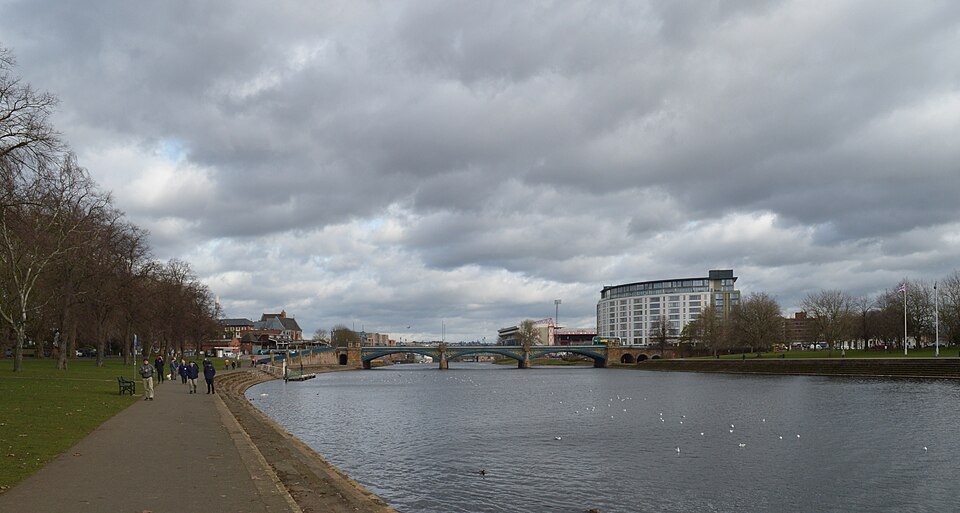
Nottingham sits on one of the great English coarse rivers. The Trent runs wide and steady past the city, with the old Nottingham Canal and the Leen alongside it. It is barbel and chub water above all, and it closes for three months every spring. The forecast below picks the day.
Get the FisHub fishing forecast for Nottingham and prepare for your trip in advance. We factor in the weather and give you a forecast several days ahead, so you can plan your fishing.
Fishing forecast for today, 11.10.2026
Morning

Weather at morning: clouds, air temperature 7°C, feels like up to 5°C. Wind speed 3.05m/s. Atmospheric pressure 1011hPa. Humidity 93%.
Angler forecast: crucian and carp bite Perfect!. Bream bite Perfect!. Pike bite Perfect!. Perch bite Perfect!.
Midday

Weather at midday: clear, air temperature 10°C, feels like up to 9°C. Wind speed 2.44m/s. Atmospheric pressure 1012hPa. Humidity 87%.
Angler forecast: crucian and carp bite Perfect!. Bream bite Perfect!. Pike bite Good. Perch bite Good.
Evening

Weather at evening: clouds, air temperature 15°C, feels like up to 14°C. Wind speed 2.78m/s. Atmospheric pressure 1013hPa. Humidity 57%.
Angler forecast: crucian and carp bite Good. Bream bite Perfect!. Pike bite Perfect!. Perch bite Perfect!.
Fishing forecast for tomorrow, 12.10.2026
Morning

Weather at morning: clouds, air temperature 12°C, feels like up to 11°C. Wind speed 2.78m/s. Atmospheric pressure 1013hPa. Humidity 91%.
Angler forecast: crucian and carp bite Perfect!. Bream bite Good. Pike bite Perfect!. Perch bite Perfect!.
Midday
Weather at midday: clouds, air temperature 16°C. Wind speed 3.97m/s. Atmospheric pressure 1012hPa. Humidity 85%.
Angler forecast: crucian and carp bite Perfect!. Bream bite Perfect!. Pike bite Good. Perch bite Good.
Evening

Weather at evening: rain, air temperature 19°C, feels like up to 20°C. Wind speed 3.69m/s. Atmospheric pressure 1011hPa. Humidity 93%.
Angler forecast: crucian and carp bite Good. Bream bite Perfect!. Pike bite Perfect!. Perch bite Perfect!.
Fishing forecast for the day after tomorrow, 13.10.2026
Morning
Weather at morning: clouds, air temperature 16°C. Wind speed 4.45m/s. Atmospheric pressure 1013hPa. Humidity 92%.
Angler forecast: crucian and carp bite Perfect!. Bream bite Good. Pike bite Perfect!. Perch bite Perfect!.
Midday
Weather at midday: rain, air temperature 16°C. Wind speed 5.4m/s. Atmospheric pressure 1015hPa. Humidity 94%.
Angler forecast: crucian and carp bite Perfect!. Bream bite Good. Pike bite Good. Perch bite Bad.
Evening

Weather at evening: clouds, air temperature 17°C. Wind speed 5.61m/s. Atmospheric pressure 1019hPa. Humidity 64%.
Angler forecast: crucian and carp bite Bad. Bream bite Good. Pike bite Bad. Perch bite Bad.
Where to fish in Nottingham
The river is the Trent, and at Nottingham it is already a big, wide watercourse with a catchment reaching back into the Peak District. Running beside it are the Nottingham Canal and the Leen, both far smaller and far more sheltered.
That contrast is the whole point of fishing here. The Trent responds to rain a long way upstream and can change height and colour overnight. The canal barely notices the same weather, which makes it the fallback when the river is unfishable and the only option at all between March and June.
As everywhere in England, none of this water is open by default. There is no state register of fishing waters: the right to fish belongs to clubs, syndicates and private fisheries. The waters are named here as geography. You need the fishery's permission as well as your licence.
Rules and licences
A rod fishing licence is required for anyone 13 or over, on club and private waters as well as public ones, with a fine of up to £2,500 for fishing without it. Junior licences for 13 to 16 year olds are free and under-13s need none. Source: Environment Agency freshwater rod fishing rules.
The Trent closes to coarse fishing and eels from 15 March to 15 June, along with every other river in England and Wales. The Nottingham Canal and enclosed stillwaters stay open through those three months.
Nottingham falls in the Midlands for the close season game rules, which matters if you keep fishing through the spring: here you may use natural or artificial fly, minnow, worm, shrimp, prawn, sand eel or artificial lures for game fish. In the south-east of England only artificial fly is allowed, so the Midlands list is the generous one.
Daily limits from the river are one pike up to 65 cm, two grayling of 30 to 38 cm and fifteen fish up to 20 cm across the coarse species. On tackle: lead between 0.06 g and 28.35 g is illegal, crayfish may not be used as bait, foul-hooked fish go back alive, gaffs and tailers are banned, rods may not be left unattended and multiple rod butts must sit within three metres.
What bites and on what
The Trent is known for barbel and chub, neither of which the forecast scores, so read the table below with that in mind. Of the four it does cover, bream are the most typical Trent fish, shoaling in the slower deeper glides and answering to a feeder rod and steady feed.
Carp in Nottingham are mainly a stillwater and canal proposition rather than a river one, which also means they are available in the spring when the Trent is shut. A carp rod chosen for the range you actually fish beats one chosen for the range you imagine.
Perch hold to bridge piers, lock furniture and canal edges. Pike run through both river and canal, with the one-fish river limit worth remembering. For lures a spinning rod with enough backbone for a big river suits the Trent, while the canal wants something shorter. Keep an eye on rod care if you fish gritty water all winter.
How to read the bite forecast
Zero to three, per species and per part of the day. Pressure comes first:
| Pike | 758–764 mm Hg | one fish up to 65 cm from the river |
| Perch | 758–762 mm Hg | piers, lock furniture, canal edges |
| Bream | 755–760 mm Hg | slow deep glides of the Trent |
| Carp | 755–765 mm Hg | canal and stillwater, open all year |
Stability is second: over 2 mm Hg between parts of a day or 3 mm Hg between days cancels the settled-weather bonus. Third comes flow, which the calculation does not see. The Trent drains a very large area, and rain in the Peak District arrives at Nottingham as height and colour roughly a day later, by which time the weather here looks fine. See also the fishing forecast for today.
The pressure where you are, in one click:
Fishing through the seasons in Nottingham
Spring. The river shuts on 15 March. Three months of canal and stillwater, and the widest choice of close season game baits in the country outside the north.
Summer. The Trent reopens on 16 June with low, clear water and a readable river. This is the season the city is known for.
Autumn. The most consistent stretch of the year: everything open, flow steadier and fish spread through all depths.
Winter. Cold and often coloured. Pike on the river and perch on the canal keep going when nothing else does.
What experienced anglers say
On a river with a catchment this size, the useful habit is to check the level before choosing the swim rather than after. A foot of extra water moves fish off the middle and tight into the inside line, and a swim that fished well last week can be empty for reasons that have nothing to do with the weather.
The second is to feed for the conditions rather than the species. Coloured, pushing water takes far more bait than clear low water does, and the same amount that works in June will kill a swim in February.
Questions and answers
When is the Trent closed to coarse fishing? From 15 March to 15 June, like every river in England and Wales. The Nottingham Canal and the enclosed stillwaters around the city are open all year, so that is where fishing continues through the spring.
What can I keep from the Trent in a day? One pike up to 65 cm, two grayling between 30 and 38 cm, and fifteen small fish up to 20 cm from among barbel, chub, bream, carp, dace, perch, roach and tench. Eels other than conger must be returned alive.
Which baits are allowed in the close season around Nottingham? Nottingham sits in the Midlands, where during the coarse close season you may fish for game fish with natural or artificial fly, minnow, worm, shrimp, prawn, sand eel or artificial lures. That is a wider list than the south-east of England allows.
Can I trust the forecast literally? It follows pressure, not flow. The Trent at Nottingham is a big river with a large catchment, and rain in the Peak District reaches the city as extra height and colour a day later, with the barometer back to normal by then.
More fishing nearby
Other towns with a forecast are listed on the fishing forecast in the United Kingdom page, and the way the score is worked out is explained under fishing forecast.