
A Pembrokeshire Weekend for Pollack
Pollack on the Pembrokeshire Edge
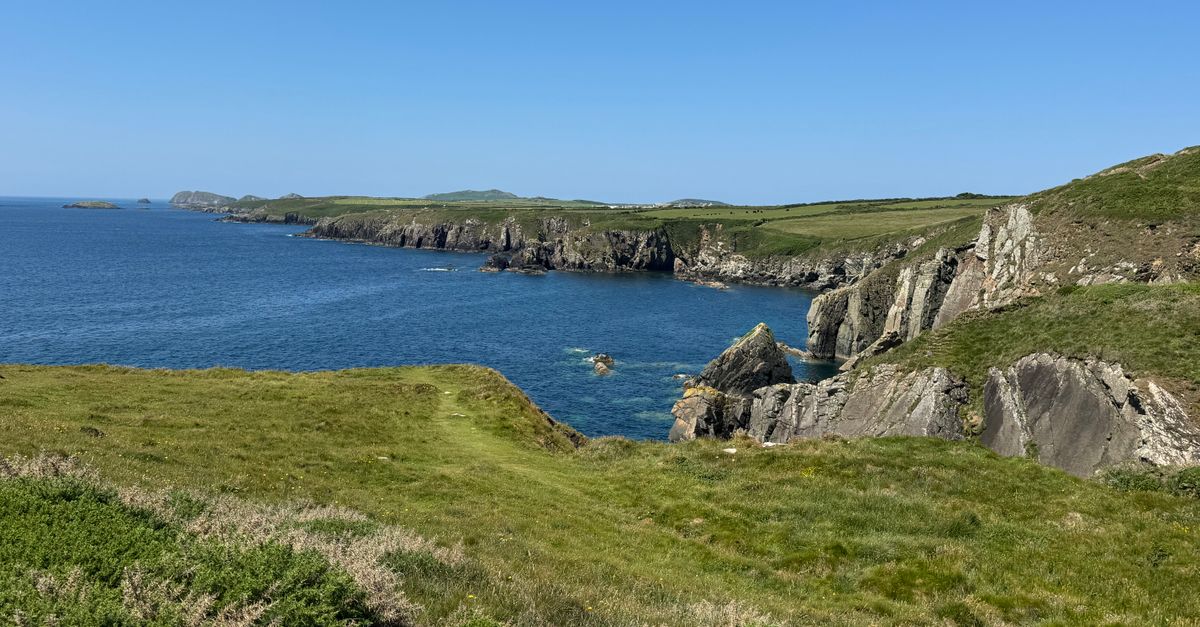
St Davids Head is one of Pembrokeshire's most rewarding pollack marks, where rough rock, kelp beds and narrow gullies meet the open water. The ground is never uniform. A clean tide seam may run beside a dark pocket of weed, and that change is often where pollack wait to ambush sandeel, mackerel fry and small wrasse.
Follow the evening flood
A compact weekend plan starts at Whitesands Bay or St Davids, with the first session timed for the flood tide. Evening light brings pollack close to the surface, particularly around slack water, when the current eases and casts can be placed accurately. Metal lures, soft plastics and diving plugs all work, but a light lure retrieved just above the kelp gives the most exciting takes.
Float-fishing is equally useful when the fish are holding tight to the rocks. Sandeel, a narrow strip of mackerel or a strip bait can be suspended beside a gully and allowed to move naturally with the surge. Pollack often hit hard, then turn immediately for cover, so strong hooks and a tough hooklength matter on this snaggy ground.
Most casts should land across tide lines, along kelp edges or into deeper channels rather than over featureless water. The same marks produce wrasse, mackerel, conger and bull huss, making every drop lively when pollack are not feeding hard. A short-handled landing net and spare lures save time among the boulders.
Solva Harbour and nearby rock marks offer a useful second session, although their mixed ground feels less classic than St Davids Head. As dusk settles over the peninsula, the flood pushes through the gullies, the kelp lifts in the swell and a silver pollack turns beneath the rod tip.
Recommended: Compact rock fishing landing net