
Chalk seams and dusk breaks on the Test
Stockbridge's middle Test: chalk seams and dusk breaks
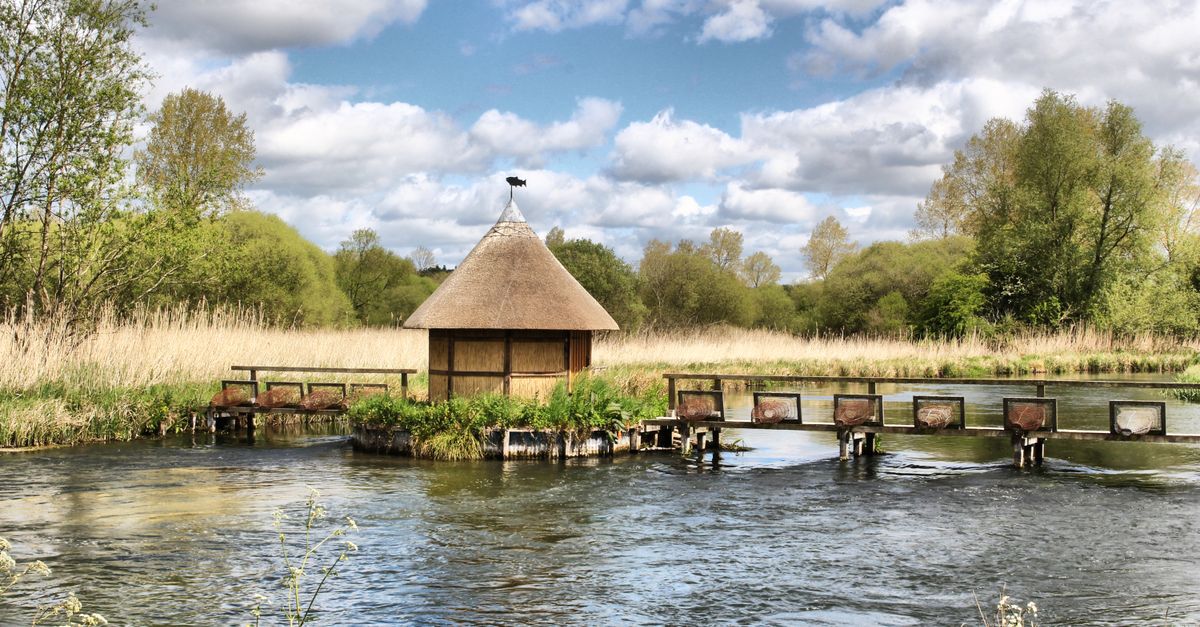
Stockbridge sits where the middle Test lays clean gravel tongues and narrow chalk seams—prime lanes for brown trout to rise in the last light. Read the seam where the main flow peels to a softer current beside weed beds or undercut banks; that thin speed change is where fish hold and charge.
Anglers work short upstream casts into the calmer lane and keep the drift tight. Rig for subtlety: an 8 ft 6 in to 9 ft 3–5 wt that turns over small patterns, a 12–15 ft tapered leader and 5X–6X tippet for tiny dries.
Flies, knots and retrieve
Start with small dry flies in #14–#18 and switch to a light nymph if the surface is blank. Fish a short leader or shorten the cast so the nymph runs just above the gravel tongue. Use an improved clinch for tippet ties, a blood knot for leader splices and a small non-slip loop on wets to lift naturally.
Retrieve sparingly at dusk: a slow hand-twist or a very short pull is usually enough when a trout locks on. The best window is often the final 60–90 minutes before darkness on calm evenings. Leckford Estate beats, Chilbolton and Kimbridge all reward anglers who read seams, not speed.
On a still night the last rise will be precise—a brown trout sliding up over the gravel, the fly line whispering, and the flash as it turns away into the dark.