
Chalk‑stream stitch
Houghton Club, 1822: Stockbridge's chalk‑stream heart
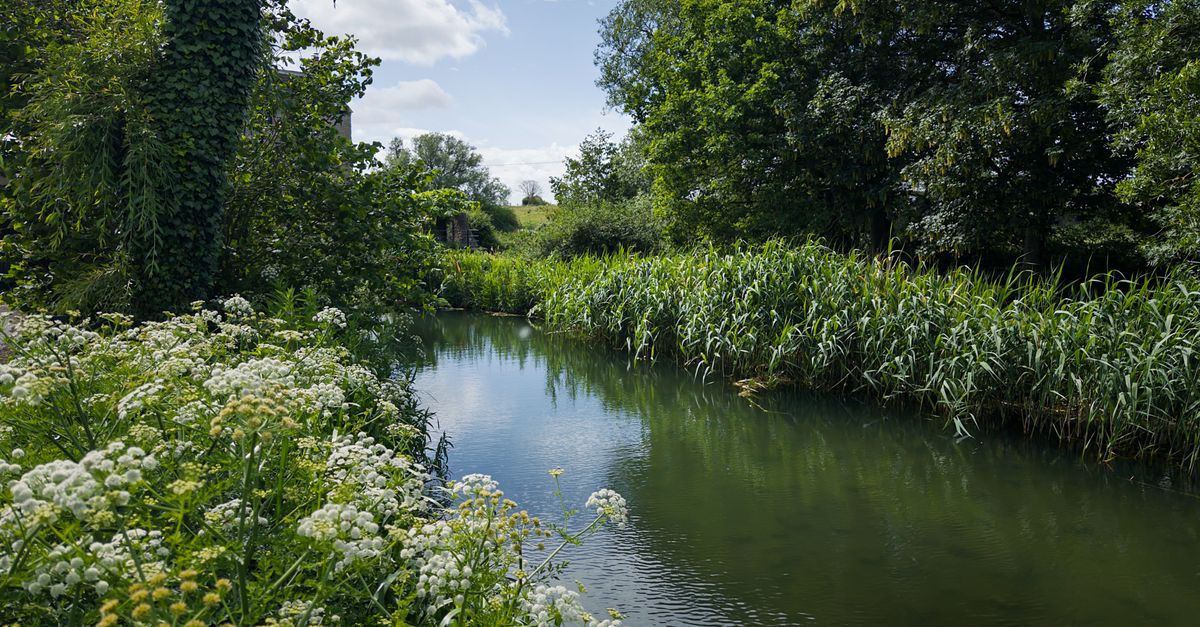
The River Test runs clear through Stockbridge, Romsey and Wherwell, and brown trout (Salmo trutta) live by sight in water so pure dry‑fly work became gospel there. Clubhouses still smell of wet hackles and strong tea; the Test is where mayfly evenings shape tactics and dressings at the water's edge.
Evening gatherings and dressings
Local meetings—often in pubs like the Baskerville Arms at Lower Shiplake, the Masons Arms at Dinnington or Ringwood halls—pair pint and pattern. Fly dressers swap chalk‑stream dressings, compare hackle quality and lengthen tippet for selective trout that refuse anything imprecise. Conversation moves fast from classic dun patterns to the pale, feather‑thin hackles that read the Test's current.
Certain beats carry a reputation: Kimbridge's prime mayfly window is well noted, Leckford offers several bookable beats, and private clubs guard their water closely. Mottisfont Abbey at peak mayfly can command premium rod days; these are the calendar dates anglers plan their year around, not casual days out.
Cuisine and custom meet on the banks. Club tea goes with toasted bread and a simple pan‑fried brown trout, butter and parsley finishing the flesh that grew on chalk spring water. Evening light, a notebook of knots, a trusted dry‑fly rod and a compact fly‑tying kit sit ready in the changing room.
At dusk a dun lifts over a shallow riffle, a trout eyes it from a patch of gravel, and the dry fly vanishes in a soft, exact splash.
Recommended: complete fly-tying kit