
From Victorian fly‑dressers to modern keepers
Stockbridge on the River Test, where gin-clear runs of 0.8 m cradle brown trout.
Saturday evening at a Test beat reads like ritual: a keeper’s lantern, a leather creel, and the precise tap of a six-foot rod laid out for inspection. Chalk gravels ripple beneath water that rarely exceeds 1.2 m and summer widths of 8–15 m yield mayfly rises that shape tactics from April to September.
Frederic M. Halford’s dry‑fly doctrine rewrote technique in the 1880s, insisting on upstream presentation and flies in a natural “cocked” posture. Weight-forward floating lines and 3X leaders with 4X–5X tippet became standard to deal with spooks and long casts; Wooly Worms and Halford’s Blue Dwarf sit alongside slim nymphs in tackle trays.
Club culture hardened rules. H. E. M. Skues and Frank Sawyer pushed nymphing into controversy with books that rattled committees, while keepers and syndicates around Stockbridge, Mertham and Winchester defended beats with strict etiquette. Robjent’s Fly Shop still supplies patterns and local lore to newcomers and old salts alike.
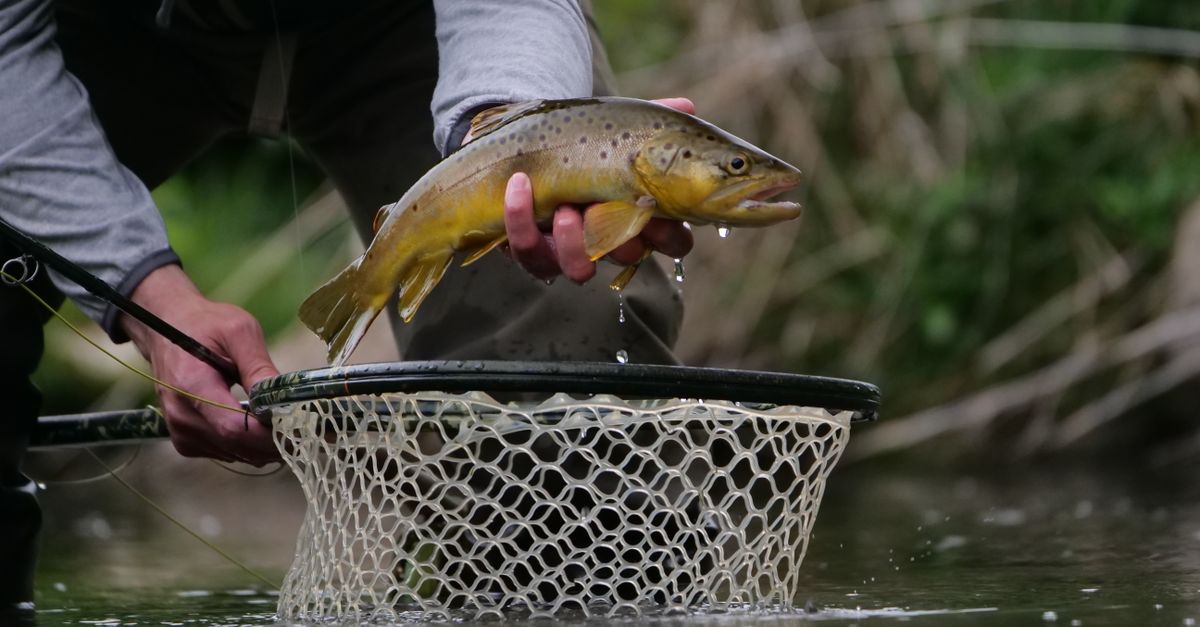
The evening hush on the Itchen often ends on a single clear fact: a trout of 30–40 cm will take a dry fly on the surface, leaving a neat dimple and a line of applause from the bank as Halford’s Blue Dwarf rides the flow at dusk.
Dry‑fly canon and kitchen tales
Club smokehouses, riverside kettles and stories of grey trout as dinner are part of the same tradition, binding angling to kitchen and folklore along Hampshire chalk streams.
Recommended: Wooly Worm flies