
Dartmoor dusk rises
East Dart headwaters above Postbridge: trout queue the riffle tails at dusk
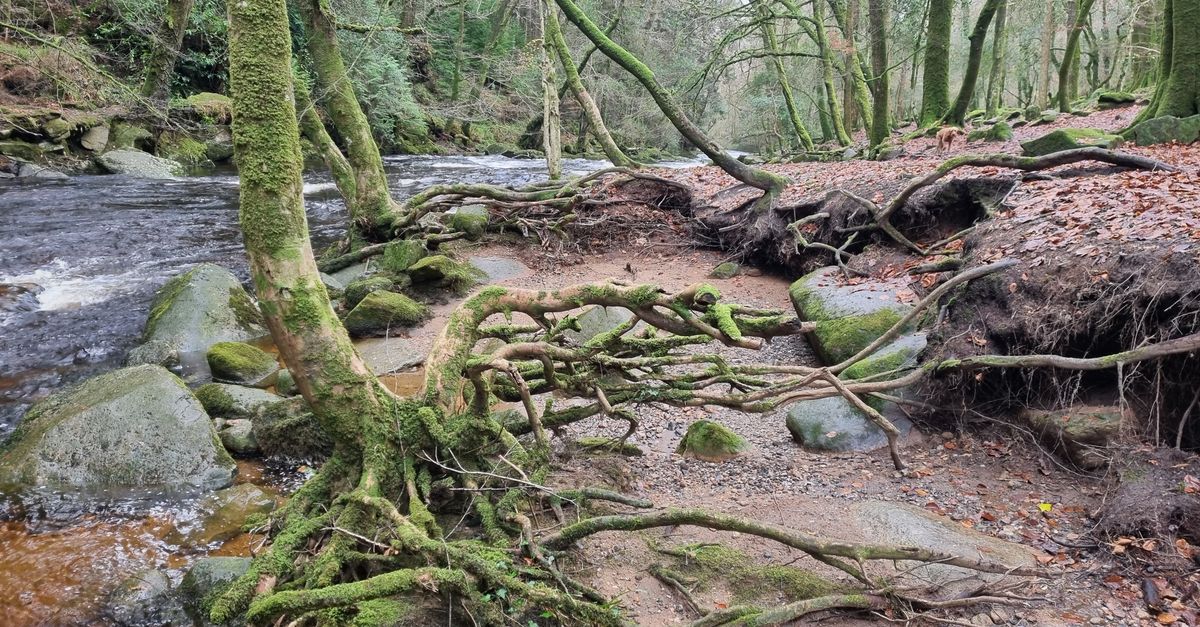
On the East Dart above Postbridge, brown trout swing into a narrow tailout as light collapses over the moor. They hold the seam where a shallow, oxygen-rich riffle spills into softer water, because emerger drift lines bundle nymphs, emergers and spent adults into a feeding lane only a few feet wide.
The pattern is driven by insect emergence and light drop, not by blind hunger. Mayflies, caddis, stoneflies, midges and late terrestrial falls—ants, beetles and craneflies—deliver food at the surface; lower light renders trout less visible to herons and otters while still allowing precise strikes.
Dusk rise mechanics
Trout shift from subsurface lies to surface feeding during the last 20–40 minutes of bright light and the first 30–60 minutes of dusk. The rise form is often a subtle head-and-tail lift when fish take emergers or small duns in clear, low flows; anglers read seams and present small dries, emerger flies or a parachute pattern, wading in with light wading boots to avoid spooking the tail.
On Dartmoor spring brooks around Princetown, Belstone and Postbridge, a fish will sit in 30–60 cm of water at a tail and take with economy. The neat geometry of a riffle tail—current, depth and light—makes the evening rise predictable: a pale arc of movement where an emerger breaks the surface and the trout follows.
Recommended: waterproof boots