
Dusk caddis pulses on the Frome
Between Dorchester and Maiden Newton the River Frome's dusk caddis pulses turn scattered risers into seam-feeding brown trout.
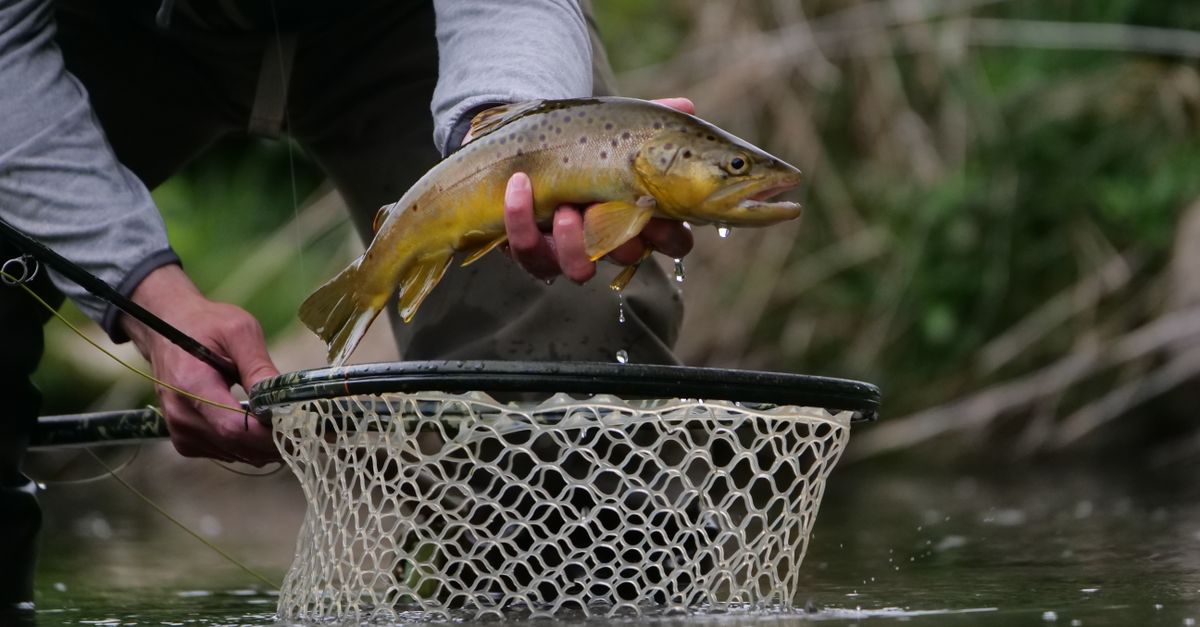
The classic chalkstream biology is on display: as light fades sedges, Pale Wateries and Blue-winged Olives hatch in force, and trout move from deeper lies to the seam—the slick boundary where current lanes meet slower water and drifting adults collect.
Anglers who work the Tincleton beat know that evenings can outfish mid-day. Small dries in sizes 12–16 are essential when sedges curtain the surface, while Pale Watery patterns and Parachute Adams cover the olive windows.
Tackle and presentation
A 9 ft, 4–5 wt rod with 5X or 6X tippet handles the delicate contact needed to ride the film without spooking free-rising wild brown trout. Long, controlled drifts along the seam and a tight loop to present tiny duns are routine; when sedges fall the surface can accept slightly bulkier imitations.
Evenings often extend into darkness on the Frome, keeping rises alive into September and October. Last light finds brown trout still sipping sedges in the seam.
Recommended: lightweight chalkstream rod