
Frome Dusk: How Trout Time Their Rises
River Frome in Dorset often shows bulging rises at dusk as adult caddis and sedges begin their evening emergence
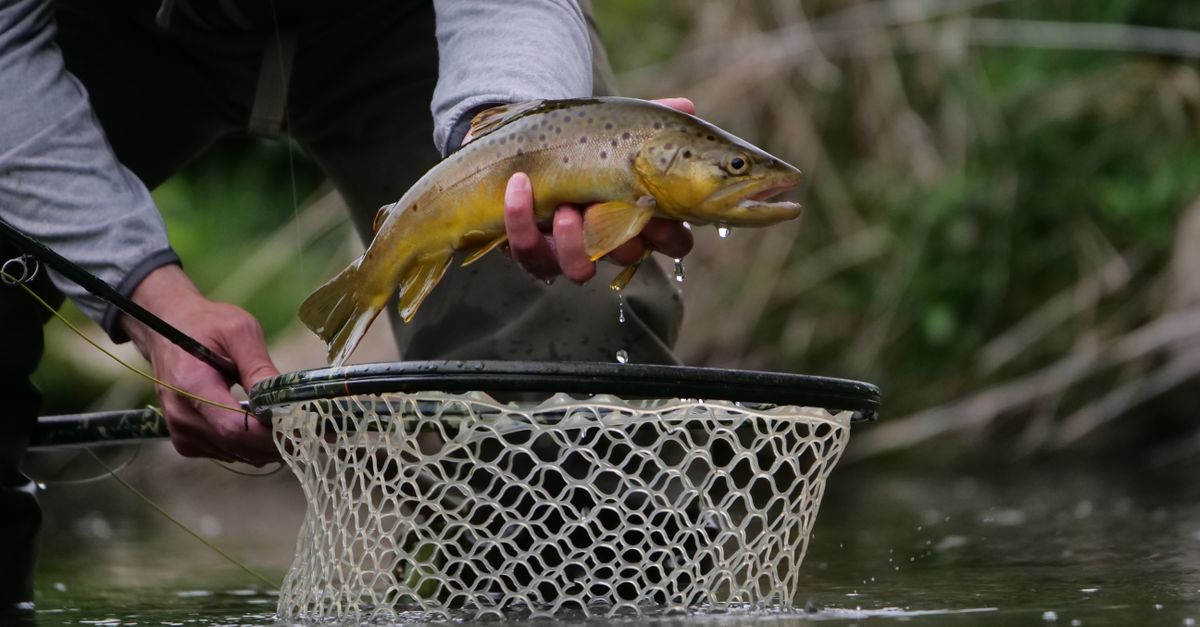
Brown trout (Salmo trutta) on this chalk stream do not sip randomly; they switch from quiet glides to explosive, bulging rises when adult caddis and cinnamon sedge return to the film to lay or when pupae ascend. That change marks the feeding window anglers watch for.
Reading the water matters: riffles and runs send emerger and pupa pulses downstream, while calmer glides and bank edges reveal the actual rises as adults drop back to the surface. Clear chalk water lets trout see insects and a silhouetted angler, so waiting until the rises begin before wading is common sense.
Gear and presentation
Evening caddis rigs tend to favour a 9 ft #4 or #5 rod, a light-coloured line for low light, and a tapered leader. For suspending a wet or pupa use about 18 inches of 4X or 5X tippet off a dry; larger streamers sit on fluorocarbon 0.20 mm. Floating lines reach comfortably to around 16 ft of water; leaders should be at least 25% longer than the depth when getting the fly down matters.
The picture is simple: tan to dark-brown sedges rise at dusk, riffles deliver the pupae, a trout pins on the film or just beneath it, and a single bulging rise can start a minute-long feeding window that separates the patient from the lucky. A cinnamon-winged sedge drifts, and a brown trout cracks the film in the last light.
Recommended: thin fluoro leader