
June dawn: Dwyfor sewin vs Cardigan Bay bass
June dawn on Afon Dwyfor and Cardigan Bay: morning windows
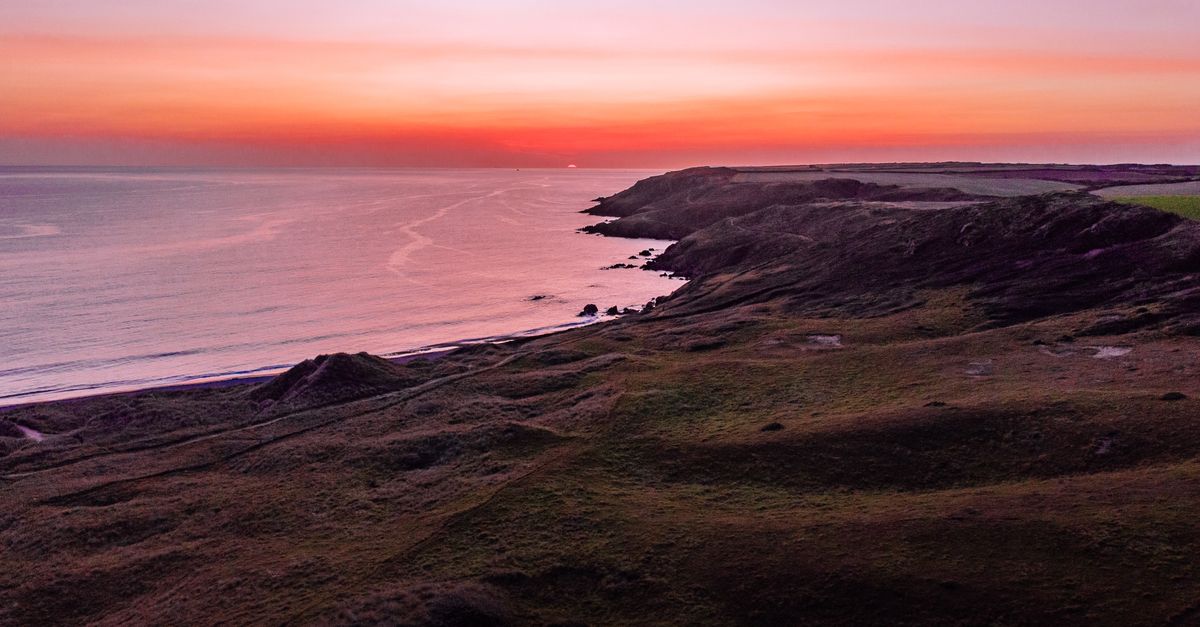
Afon Dwyfor's first light — the first 2–3 hours of daylight — is the prime sewin window, and late evening often repeats the pattern. Riverside anglers chasing sea trout stick to low-light work; bright mid-mornings rarely repay the effort.
Water clarity is the deciding factor. Clear summer-level water calls for stealth and small patterns, while spate-fresh flows push crews onto heavier tackle and more visible flies. Productive lies remain undercut banks, overhangs, weedbeds and boulder-strewn channels.
Morning rigs and tactical notes
For daytime on the Dwyfor the morning rig is typically a 9 ft–9 ft 6 in rod, 5–6 wt with a floating line, a 7 ft tapered leader and 6 ft of 3 lb tippet for clear water. After a small spate switch to a 10 ft 6 wt, floating or intermediate line, a 7 ft 2X tapered fluorocarbon leader and 4 ft of 6–8 lb fluorocarbon for deeper presentation.
Flies that keep producing in June include Silver Stoat's Tail, Stoats Tail and Curry's Red Shrimp. Cardigan Bay bass favour the morning tide push and any coloured water with bait; there is no fresh verified bass report for the bay today, but standard search tactics along tidal edges and bait lines apply.
Tide charts, local beach colour and a dawn cast through the push usually tell the story: sandeels moving, lines pulled tight, a low sun flashing fish on the run.
Recommended: sea trout shrimp fly