
River Test Dusk Rise
River Test dusk rise: 30 minutes after sunset
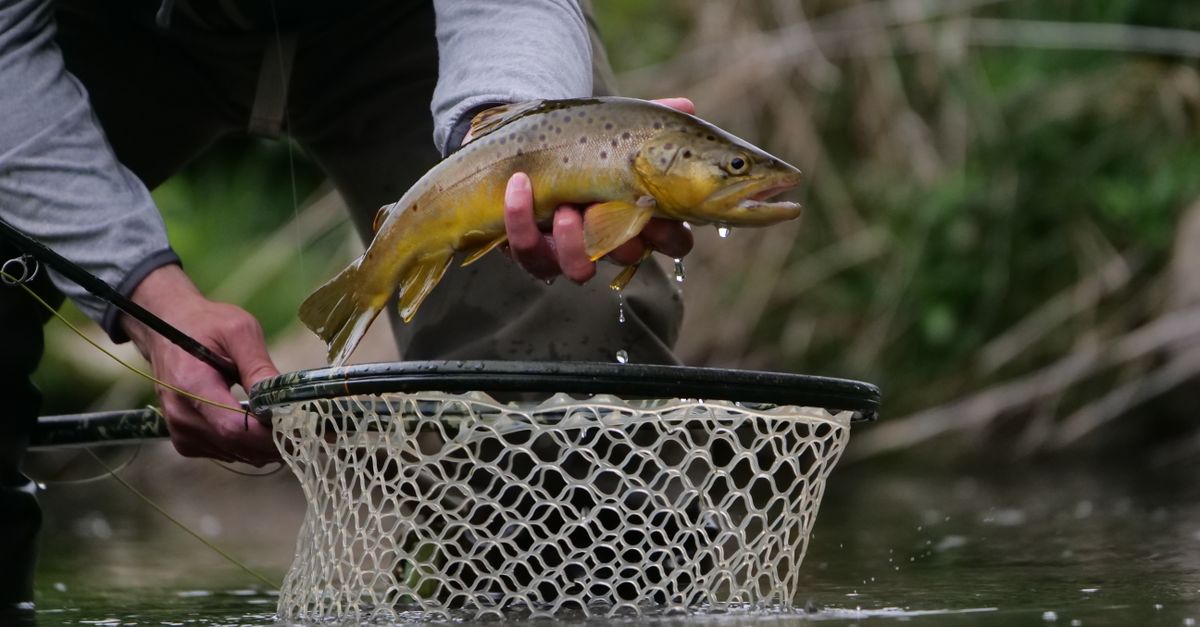
On the River Test in Hampshire brown trout begin rising predictably 30 minutes after sunset during summer insect pulses, carving clear rise corridors from late June through August. The Upper Test’s crystal-clear water and gravel patches make trout sighted and stalked rather than blindly fished.
Blue-ringed olives and hatch matching
The evening rise is driven by the blue-ringed olive hatch; trout ignore bulky sedge or daddy long legs when olives dominate. Effective patterns are dry olives (sizes 14–16), small sedges (size 14) and drowns (size 16). Anglers check spiderwebs on bridges to see what hatched the previous day and match the hatch accordingly.
Presentation matters: approach from below, cast upstream to a rising fish, make the first and only cast count and let the fly drift naturally through the 0.3–0.6 m feeding band. Stealth gear like a 4-5 wt rod with a 6 ft leader (4X–5X) tied with a double blood knot keeps takes clean. Visibility of 2–3 metres turns stalking into selective targeting; typical trout measure 15–25 cm.
Water above 18°C shuts the window as trout go lethargic; the best period is late June to early September with a July–August peak. A dry olive lands in the ripple, a shadow hesitates, then a silver flank flashes and the trout strips back into the gravel seam.