
Reading Test seams for evening browns
Stockbridge on the River Test puts on its liveliest evening rise in July.
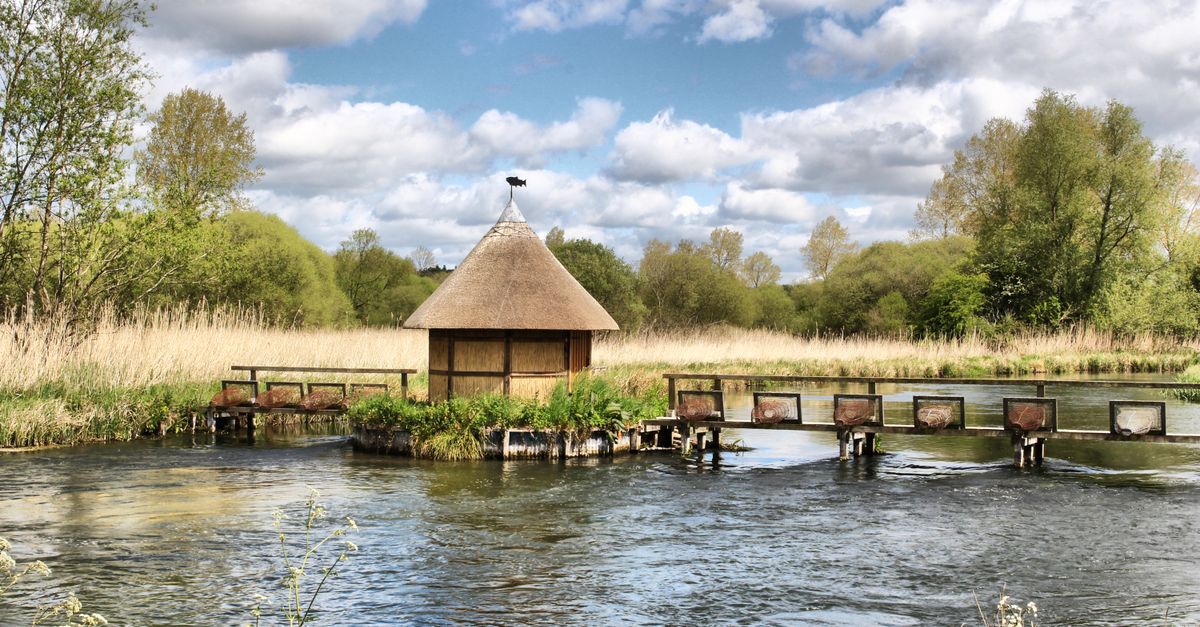
Glassy water, mayfly pulses and trout moving from lies at 15–45 cm (6–18 in) set the scene. Spot the insect pulses first: a string of tiny surface breaks — duns or spinners — is where brown trout rise. Those rises often sit at the tail of riffles or in downstream seams beside marginal weed and fallen alder.
Rig a dry-dropper using a Comparadun or CDC emerger on top with a nymph dropper 4–6 inches beneath. Tie the dropper with a dropper loop or a short surgeon’s loop so the nymph hangs freely without fouling the dry.
Presentation matters: cast across the seam and let the rig swing into the slower water beside the weed where trout park to ambush insects. In glassy conditions shorten the leader; trout are less wary and the fly lands truer.
Leader and dusk adjustments
Begin the evening on a long leader (12–15 ft) for daylight stealth. As dusk falls reduce to 8–10 ft to improve turnover and feel. For surface-style bites use a short stout leader: 2 ft of 20lb tippet knotted to 3 ft of 15lb tippet so the fly rides high and carries vibration.
On a dark, windless night fish shallower; with ambient light allow a deeper drift. A flash under the alder, the emergent pulled under, and the rod tip bent — that is the Test in July.