
Evening sewin seams at Cenarth
Cenarth Falls on the River Teifi produces a narrow dusk seam where sewin will sit in 1–3 ft of water.
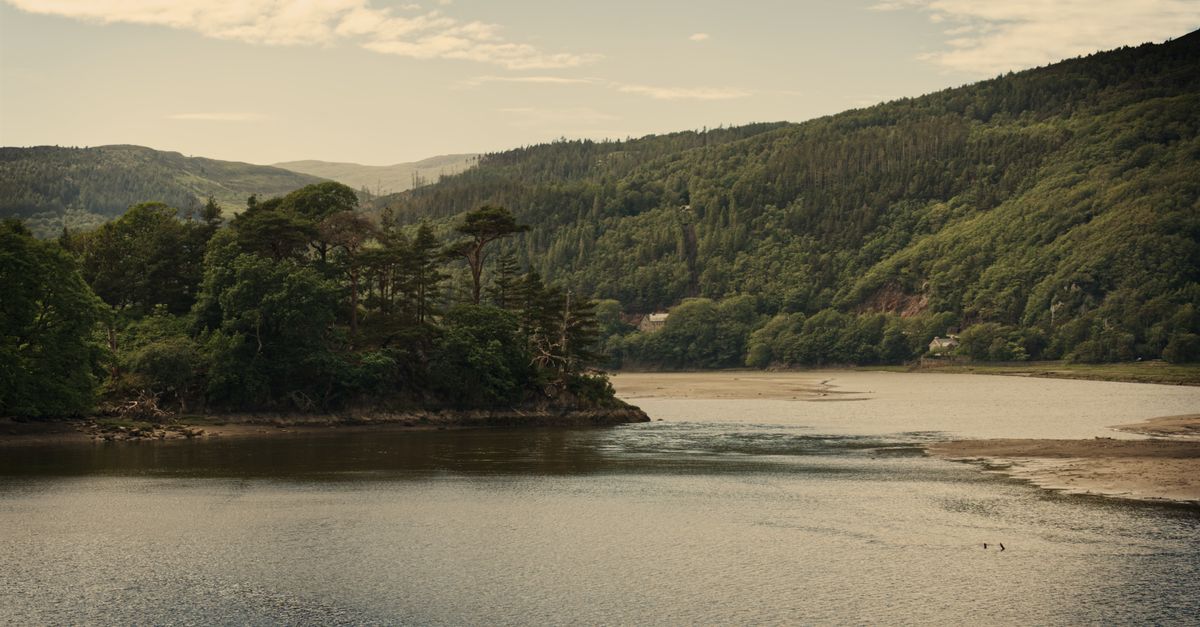
Surface breaks are the most obvious cue: a thin V-shaped wrinkle or narrow ‘boil’ where faster glide meets slack. Sewin rarely sit in the torrent; they tuck just below that seam and ambush drifting food. Short, cross-current casts that let the fly hang in the feeding lane are decisive.
Insect pulses arrive at last light as a faint lift along the slick edge. Those brief bursts of rising fish come in tight windows; a small dark dry or emerger can trigger explosive grabs. On the Teifi, these pulses peak on warm, slightly coloured evenings after a bump in water.
Lee lines behind boulders, fallen banks or bridge shadows form predictable feeding lanes on the Cenarth reaches. Fish use the calm side to conserve energy and intercept food stacked by the current. Aim casts to the calm seam where the main flow skirts the obstruction.
Practical setup
A 9–10 ft fly rod with a floating line, a 9–12 ft tapered leader and small dark flies or wet patterns is the standard starting kit. Use an improved clinch or a loop knot to maintain fly action; keep casts short and mend sparingly so the fly hangs in the seam.
When the light dies, concentrate on the narrow strip between boil and calm. A single telltale ripple beneath Cenarth Bridge, a flash of silver and the reel will start singing as a sewin breaks cover.
Recommended: WF floating line