
Reading Test seams at Stockbridge
Stockbridge on the River Test shows tiny dimple rises at dusk that betray feeding brown trout.
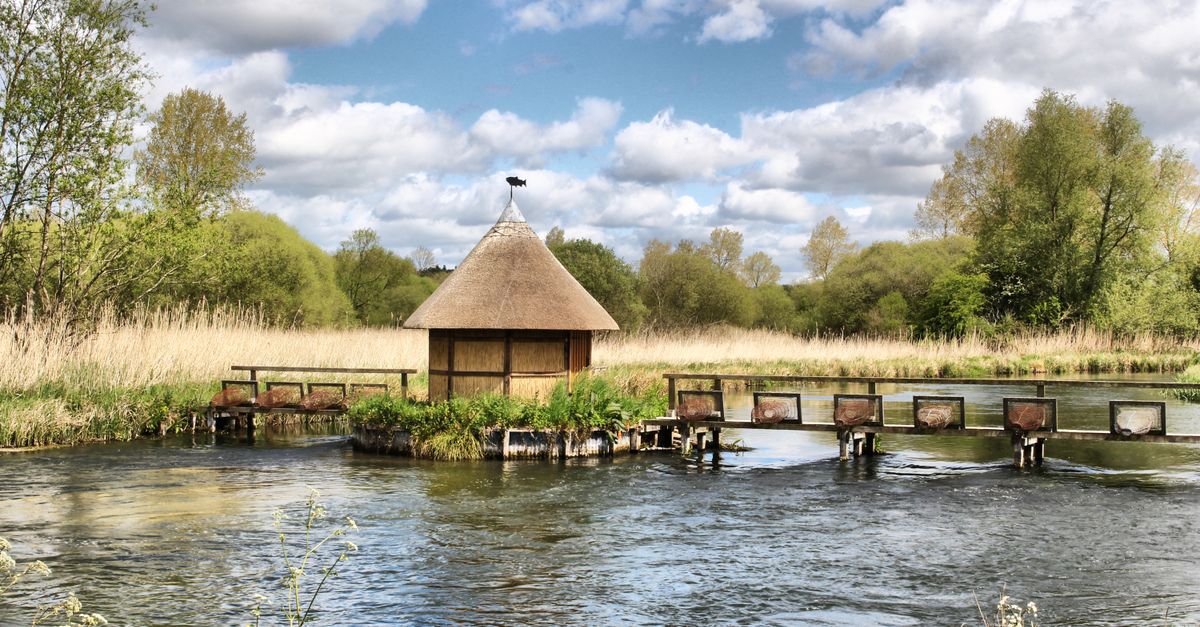
On the chalk-stream Test anglers watch three clear signals along the seam: the dimple rise, the travelling push or boil on the seam edge, and the pale flash with no visible splash. Each cue demands a different fly and a precise lane in low water.
Gear matters. A 9 ft 4 wt rod with a 9–10 ft tapered leader is the standard. Present upstream and slightly across so the fly lands a foot or two above the fish’s lie and drifts cleanly down the soft-water line between the main current and the slick.
Fly choices and tactic
Start with a small buoyant dry when clear dimple rises show—mayfly or small sedge imitations. Switch to a soft-hackle when fish are moving but not fully committing; fish it as a swing or with a subtle lift through the seam. Drop a fine nymph or tiny spinner-dropper when takes are subsurface or only occasional head-pokes.
Knot and leader notes: a neat perfection loop or fine tippet knot keeps presentation subtle. In low flows the trout sits on the edge of the seam, not the fastest lane—cast to the soft-water margin and avoid drag. The Test’s evening seam reads like a ledger: a sip, a hump, a flash—each a single, precise instruction to the angler.
Recommended: soft-hackle fly pack