
Three evening dry‑fly tweaks for the River Test
River Test, Hampshire: 12-foot leader and 4X–5X tippet for evening caddis
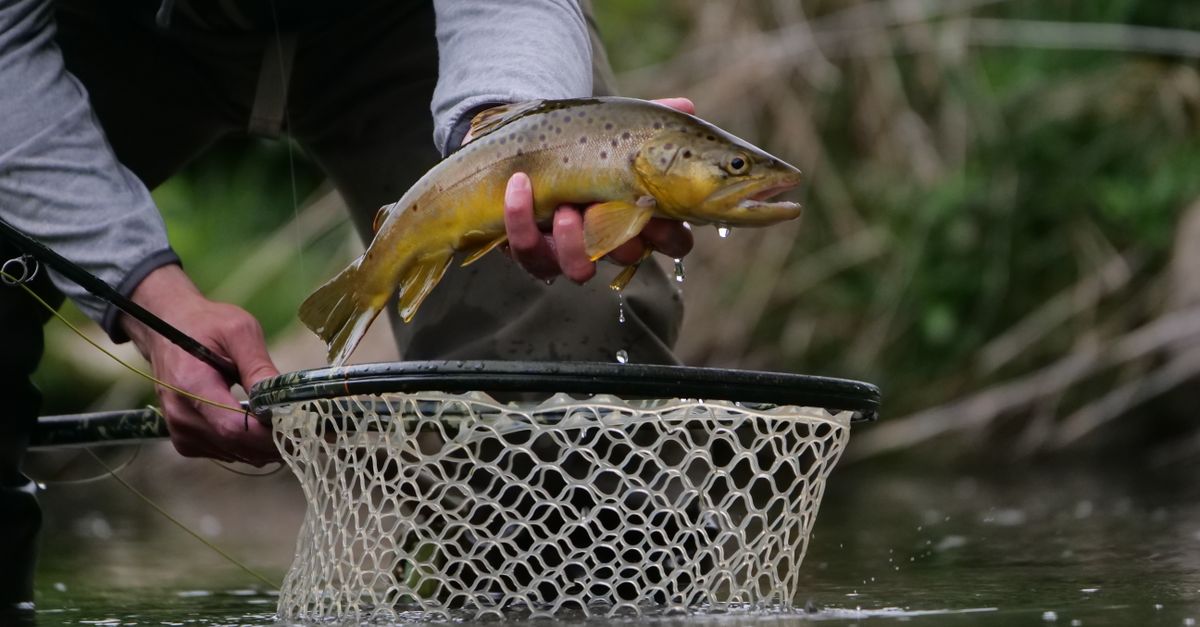
The angler rigs a 12-foot leader with an 18–20 inch 4X–5X tippet to suspend a pupal pattern beneath a dry fly. That long leader softens the anchor and keeps the pupal profile natural beneath the surface film while a sight fly marks the take.
Use size #14–#16 dry flies for late-spring caddis; drop to #14 when trout ignore smaller emerger profiles. If surface feeding dies, tie on a size #10–#12 wet fly and fish the sub‑surface column. Bright white posts or an orange‑butt trigger help spot fading rises at dusk.
Three instant presentation fixes from the bank: twitch the dry like tapping a nail for slow seams; cast 1–2 ft above and just upstream of the rise then “check back” the line to create slack; or employ a reach cast to reduce immediate drag. Keep the rod high for short casts and lift steadily on a take.
Work shallow transitions no deeper than three feet, using methodical three‑second drifts in small grids and overlapping casts. Aim to land one foot short of undercut banks to avoid snags. A double dry set‑up—small dropper two feet behind a sight fly—gives a second chance as light fades. Refresh a wetted fly with Orvis Hy‑Flote before the next cast and watch the trout sip a size #16 emerger beneath a pale caddis silhouette at dusk.
Quick checklist
12-foot leader, 4X–5X tippet, #14–#16 dry patterns, reach cast, twitch presentation, Orvis Hy‑Flote.