
Three leader knots and stealth leaders for the River Test
Between Stockbridge and Fullerton on the River Test a 9–12 ft leader with three clean knots is the baseline for sight‑fishing brown trout.
An angler should start the butt with 20 lb mono, step down through 12–8 lb in the midsection and finish with 6X–5X for dries or 4X when throwing slightly heavier nymphs. The three knots to trust are a loop‑to‑loop or nail knot to join fly line to leader, a blood knot or double surgeon’s knot to join taper sections, and an improved clinch or clinched knot to secure the fly. Wet knots before seating; thin tippet will cut into itself if tightened dry.
Keep the leader short and smooth; bulk near the fly wrecks subtle presentations. Many Test anglers shorten the final taper, reserving the last 2–3 ft as the thinnest section so turnover stays gentle over gin‑clear chalkstream water. If a sighter is needed, place a low‑contrast high‑vis section well up the leader, not next to the fly.
Visibility and stealth
Use clear mono for the final tippet, avoid bright colours close to the fly and trim tag ends neat. Lubricate knots with saliva or water before tightening. A loop‑to‑loop gives subtle movement; a nail knot keeps the butt profile slim for longer casts. For single‑handed rods prefer loop connections; for long casts with heavy nymph rigs a nailed butt can help.
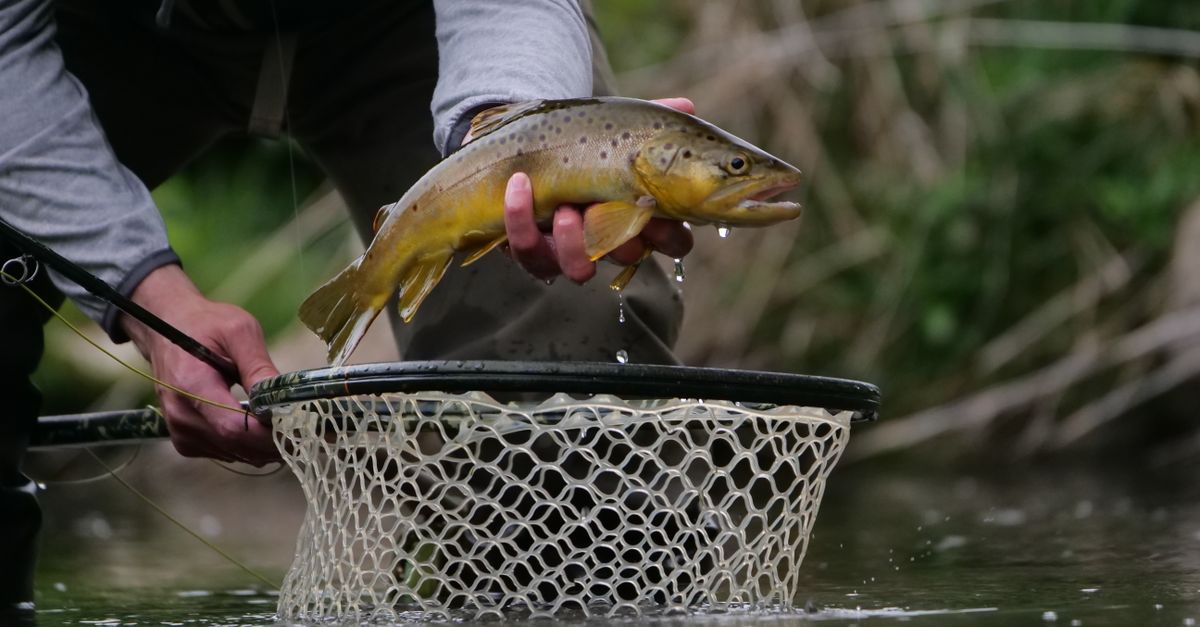
Approach low and downstream of the fish’s line of sight, cast at roughly a 45° downstream angle, mend as little as possible and present the fly on a drag‑free drift. A brown trout rising in the shade beneath a willow, glassy eyes fixed, is the final test of that stealthy leader and those three knots.
Recommended: tapered nylon leader