Spinners: a blade on a shaft
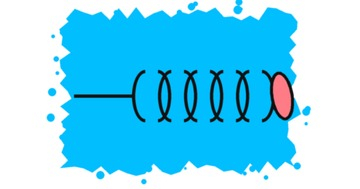
A spinner is made up of a straight shaft, a blade on a clevis, and a weighted body on that same shaft. The blade turns around the shaft while the shaft itself travels straight — that separation is exactly what makes the lure what it is.
How it starts turning
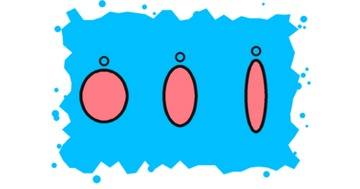
The current pushes the blade from the side; it breaks loose and starts spinning, tracing a cone around the shaft. The angle of that cone is set by the blade shape: a wide angle gives strong resistance and a slow run, a narrow one less resistance and a deeper run.
The body is more than just weight
The weight on the shaft does three things at once: it gives mass for casting, keeps the shaft from twisting, and sets the balance that lets the blade turn at all. A spinner without a body won’t cast and won’t start turning — it isn’t a finishing touch.
It always twists the line
The turning is passed on to the line, and without a swivel the twist builds up all the way to the reel. This isn’t a flaw in one particular model but a property of the principle itself: the blade turns one way, and nothing stops that motion except a turning part in the rig.
Dressing on the treble hook
The treble hook often carries a bunch of thread or hair. It’s not decoration: the dressing slows the lure’s fall on the pause and gives the tail its own, slower motion. Wet dressing clumps together and barely works — you have to fan it out by hand, and you can see it in how the lure starts to fall more evenly.
It’s retrieved at a steady pace
A spinner doesn’t like pauses: stopping kills the spin, and the lure just sinks. Depth is set by retrieve speed — faster means higher, slower means deeper, and there’s no third lever.
Against the current it starts turning on its own and runs shallow; with the current you have to retrieve faster just to get the blade spinning at all.
Size filters the fish
A small spinner draws takes from anything that swims by, a large one works on bigger fish and worse on small ones. It’s not about trophies but about which fish can even take it: a wide blade noticeably increases the lure’s apparent size without adding to its length.
Where it’s awkward
In strong current the blade spins on its own from the flow, and the lure rises to the surface before it reaches where it needs to be. In weed, an open treble hook picks up stems on the very first cast. And it casts worse into the wind than other lures: a wide blade brakes in the air as it does in the water. On open water this settles the choice: where you must reach a distant spot, anglers pick a more compact lure, even if the spinner works better.