Metal lures: they work through light
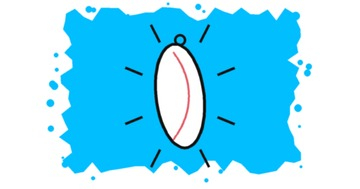
A metal lure is a piece of metal that doesn’t look like prey and doesn’t try to. It works through two things: reflected light and vibration in the water, which fish feel with the lateral line before they ever see the lure itself.
The category splits by type of movement
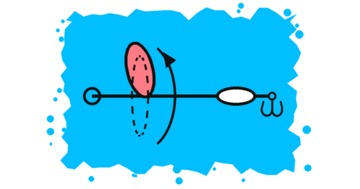
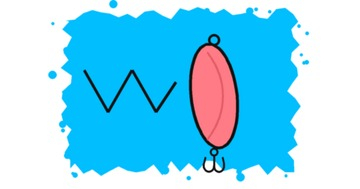
A spinner has a blade that spins around a shaft: the shaft itself travels straight while the blade traces a cone around it. A spoon has no shaft at all — a curved plate rocks from side to side and drifts sideways off the straight line as it does.
This is the main choice within the category: spinning gives a steady, continuous signal, while rocking gives an uneven one, with pauses and breaks.
Metal does what plastic doesn’t
A polished surface reflects light in short flashes with every turn — a hardbait doesn’t do that, its side moves smoothly. And metal sinks on its own: a spinner or spoon needs no sinker and no hollow body — the weight is the body.
One part is essential
A spinner always twists the line, and without a swivel the twist travels all the way to the reel. A spoon does this less, but the wrong curve can still send it into a spin. The swivel here isn’t an accessory — it’s part of the rig.
Size and weight are one number
With a metal lure you can’t take the same shape in a different weight: the mass is the body of the lure. That’s why the packet states the weight in grams, and that same number describes size, casting distance and sink speed all at once. You can’t change just one of these — the whole lure changes.
Colour is a finish, not paint on the surface
Silver, gold and copper give different flash tones: cool, warm and dark. A matte surface scatters light, a polished one throws pinpoint flashes. Painted models work differently — they show colour rather than flash, and in murky water these are two different tools.
Its history is shorter than it looks
It’s the simplest design of all the artificial lures: a plate, a hook and a ring. That simplicity is exactly why the spinner and the spoon survived the arrival of soft plastic and hardbaits — cheaper to make, and there’s nothing in it to break.
What it can’t do
It doesn’t hold depth: depth is set by retrieve speed and the weight of the plate itself, not by the design. Stop the retrieve and the lure goes down, and even a spoon, which keeps its action as it falls, is now doing it at a different depth. And it can’t get through weed: an open treble hook picks up everything in its path. Where the bottom is snaggy, you need a lure with a covered point, not a metal plate with two or three open hooks.