How groundbait works in water
Groundbait is mixed on the bank, but it works in the water — and the two states have almost nothing in common. The moment the ball touches the water, composition stops being what matters most: from then on, everything depends on how that composition spreads through the water column.
Three volumes at once
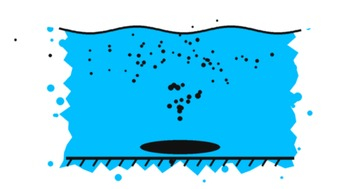
Groundbait exists in three places at once: a patch on the bottom, a column in the water, and a cloud of fine particles. Each of the three calls different fish at a different depth, and a mix built for one barely works for the other two.
What decides where the mix goes
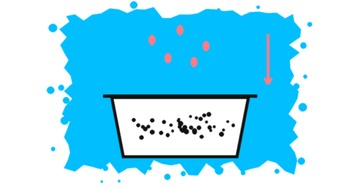
Two parameters decide it: how much water is in the mix, and how firmly it was packed. The list of ingredients has almost nothing to do with it. Both are set before the cast and don't change after it. That's why a mistake in moisture costs more than a mistake in composition.
Depth changes everything
The trip down is the time in which the ball manages to give up part of itself. In shallow water almost the whole mix reaches the bottom even if it's loosely packed; at depth, the same ball may not deliver even half of it. That's why the same mix is prepared differently for different depths.
Current moves the spot
Everything that went into the water column drifts past the point where it landed, and the patch on the bottom ends up somewhere other than where it was thrown. The slower a particle settles, the further it gets carried. That's why in current the cast is aimed upstream of the spot, and the mix is made heavier.
Why this matters for choosing a spot
A column of cloud gathers fish above the bottom, and bites come from somewhere other than where the hookbait lies. A patch on the bottom keeps fish down low but calls slower. The choice between them changes the depth at which the float and hookbait need to be presented.
Two cards in this section
Patch, column and cloud — how the mix spreads out and what that gives. Moisture and break-down time — the decision made before the cast, and never undone after it.