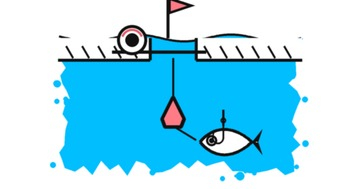
Fishing gear: the five groups
A fishing setup is not one object but a system of several parts, in which every link limits the rest. The weakest link decides what the whole thing will hold: a strong rod will not save a worn line, and an expensive reel will not fix a badly tied knot.
The five groups a setup is built from
This section is arranged the way a setup is assembled in your hands — from what the angler holds to what holds the fish.
- Fishing rods — the blank that casts the lure and absorbs the runs.
- Fishing reels — store the line and release it under load.
- Fishing line — the connection between angler and lure.
- Hooks — the only part of the setup that touches the fish.
- Fishing knots — what joins everything above together.
Why knots are a group of their own
A knot is not bought, it is tied, and that is exactly why it fails most often. Every knot takes away part of the line's strength: at the bend the load is spread unevenly. That is why breaks happen at the knot more often than in the middle of a length, and why the knot, not the blank, usually turns out to be the weakest link.
The groups are not independent of each other
A choice in one group narrows the choice in the rest. The rod type decides which reel will sit on it and how. The line material decides which knot holds on it and which slips. Hook size is matched to leader thickness, not to the size of fish you are hoping for.
So a setup is chosen starting from the method of fishing, not from a single purchase. The method fixes the rod type, and after that every further choice is made under the ones already made.
Where to start reading
If you are putting together your first setup, a workable order is this: first the method and the rod type, then a reel to match, then line to suit the fishing, and only at the end the hook and the knot. The last two groups are the cheapest and at the same time the most important: they are where a setup breaks.
What is in each group
The groups are laid out the same way: the category holds a general article about the object, and its subcategories break it down by kind. Rods have six types by method, reels three by principle, line three materials plus leader material, and knots are split between hook knots and joining knots.
This reference describes objects, it does not recommend models. Brands and prices change every season; how a hook is built, how a reel works and why a knot holds or slips do not.