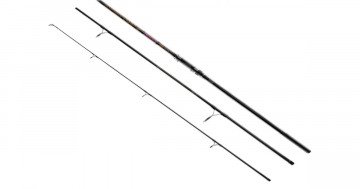
Carp rods: casting and playing fish
Carp fishing works the opposite way to spinning: the rig is cast once and then you wait — an hour, a night, sometimes several days. For most of that time the rod lies on a rest, not in your hands. The demands on it are quite different.
Two jobs, both about power
A carp blank needs range and reserve power. Range because baiting and fishing happen at distance; power because a big fish pulls for a long time and does not give up on the first run.
Sensitivity is not wanted here at all: the bite is announced by an alarm, not by the blank. That is the main difference from spinning, and it is what makes carp rods what they are — long, powerful and not meant to be held.
The rod works as part of a set, not alone
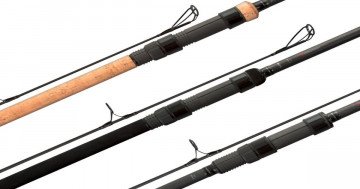
A carp outfit is almost never used singly: several rods stand on a rest, with alarms beside them and reels that let line run freely. That is why the rods are matched — so the rigs behave predictably and land at the same distance.
Playing the fish matters more than the strike
In spinning a mistake costs you a fish at the strike; in carp fishing it costs you during a long fight. Here the blank absorbs the runs instead of the angler: the more it takes on, the less load reaches the knot and the hooklink. That is why an over-stiff carp rod breaks rigs more often than a softer one, though it looks more solid.
Length is almost always on the side of distance
In most types length is a compromise between range and comfort. In carp rods that compromise is shifted: since the blank lies on a rest rather than in the hand, length barely tires the angler — so it is chosen for the distance needed. The limit is not your arm but the bank: you cannot cast a long rod under overhanging branches.
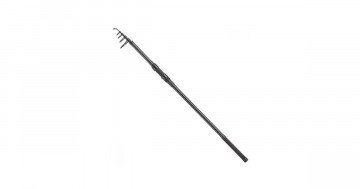
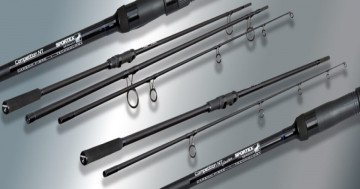
The second limit is transport. A long ferruled blank will not pack shorter than its longest section, and that is settled before the purchase, not after. Details in Carp rod length.
What is decided before the bite and what after
Before the bite, range and accuracy do the work: will the rig land where you baited. After it, power and action: will the blank take a long load and cushion the runs. These are different properties, and a rod that is good at one is often ordinary at the other. That is why carp blanks are divided by purpose rather than made universal.
The features they are sorted by
Carp rods are sorted both by purpose and by construction — both are covered separately here: by purpose and by construction. There are separate articles on test curve, action, length and material.
What a carp rod is in general — in What a carp rod is, and the features common to all types — in Fishing rods.