Tip-ups: with a flag and without
Both rigs do the same job: they hold a baitfish under the hole and let the line run free once a predator has taken it. The one difference is whether the rig reports the bite.
The tip-up reports it
A tip-up has a signal — a spring-loaded arm with a flag, cocked so that the reel turning releases it. The angler sees the raised flags from one spot and only walks to the hole where something happened.
The flagless tip-up reports nothing
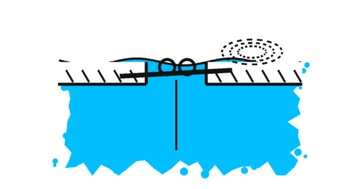
A flagless tip-up is the same thing without a signal: a line winder laid across the hole and a coil of spare line. The only way to find out about a bite is to walk over, so these are set where the round is short and quick.
What's shared underneath
The reserve of line, the sinker, the leader and the hook with the baitfish are the same in both. So are the requirements: free running, no loops, resistance to frost. So everything written about a tip-up's mechanics applies to the flagless version too, except the signal.
How they're set on the hole
The rig has to sit firmly and not slide into the hole after the fish — that's the most common way to lose one. The base is weighed down with snow or set on two blocks of ice, and the line is run so it doesn't lie on the ice itself: a line frozen to the ice stops a run as surely as a knot.
Why they aren't made more complicated
Every extra part in the frost is one more thing that ices up or breaks in gloved hands. So the designs that stuck have the fewest moving parts: a reel, an arm, a spindle. In winter, a complicated rig loses to a simple one not on performance, but on failures.
The same principle works in open water too
Free-running line and a signal aren't a winter invention. In open water the same job is done by a free-floating disc rig — a floating board with a baitfish under it: it holds the fish, pays out line, and reports the bite itself by flipping bright-side-up. A rig with no signal exists in open water too, and it's checked the same way — by walking the round.
How many are set
That isn't decided by the rig, it's decided by the rules in force, and those differ by region and by country. The second, practical limit is the round: there should be as many rigs as the angler can check while the baitfish on the first one is still alive.