Hardbait classes: two axes, not a list
Hardbaits have many classes, and on a list they look like a dozen independent names. In fact they are set by two different axes: what the lure does when it is not being retrieved, and how it moves when it is.
The first axis — behaviour on a pause
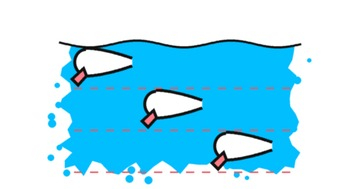
Stop the retrieve, and a hardbait does one of three things: it floats up, sinks, or stays right where it was. This is floating, sinking and suspending, and the difference between them shows only at the moment it stops.
The second axis — body shape
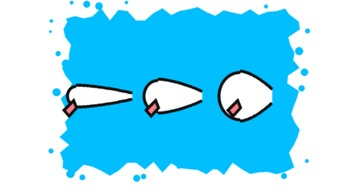
A narrow long body and a short tall one move differently at the same speed: the first runs a tight amplitude, the second rolls wide. This is a separate axis of classification, and it has nothing to do with buoyancy: both a minnow and a crank can be sinking.
Why the axes do not collapse into one list
Two independent traits give not a sum but a product: a floating minnow and a sinking minnow are different tools with the same shape, while a floating minnow and a floating crank are different tools with the same pause behaviour. That is why a hardbait is described with both words at once, not one.
Which of this is printed on the box
The maker prints length in millimetres, weight in grams and the working depth range on the box, and marks the buoyancy class with letters. These marks are a description, not advice: they say what the lure will do, not where or when to fish it.
Where the names themselves came from
The names come from the fish and from the retrieve: minnow is a slim baitfish, shad is a fish with a deep body, and crank points to the plain steady winding of the reel the lure is made for. All three are used as they stand, the same way ‘twister’ is in the neighbouring section on soft lures.
Class predicts how an unfamiliar lure will behave
This is the whole practical use of classification: seeing the label, you can say what the lure will do on a pause and how wide it will roll, before the first cast. A model with no class promises nothing — it has to be studied by retrieving it near the bank, and time on the water usually goes on other things.
Classes blend, and that is normal
Some models are minnow-shaped but behave more like a crank, and some jointed lures do not fit any of the categories at all. Class is a way to quickly read an unfamiliar lure, not a law it has to obey. Either way the lure gets tested by retrieving it, and class stays a hint of where to start.