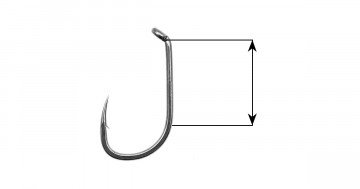
Hook types: the features hooks are sorted by
A hook has no single „type". It is described by a set of features, and each one is independent of the others: two hooks can share a bend shape and differ completely in eye angle. That is why every feature has its own article in this subcategory.
Features of the hook itself
These decide how the hook penetrates and how it holds.
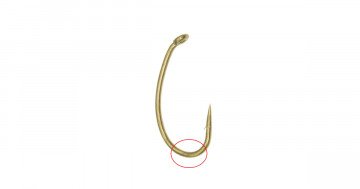
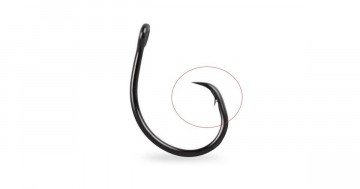
- By bend shape — the curve decides how securely the hook keeps a fish.
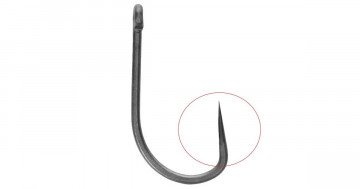
- By point shape — it governs the force needed to penetrate.
- By barb — barbed or barbless.
Features of attachment
The second group describes the part that connects the hook to line and bait.
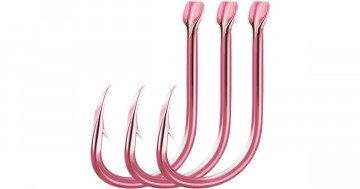
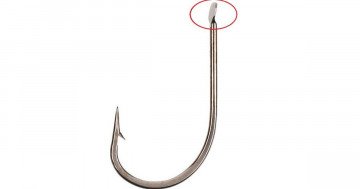
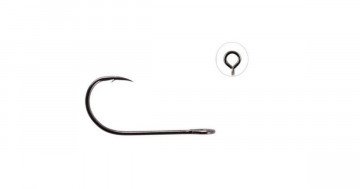
- By eye shape — ring eye or spade end.
- By eye angle — how it is turned relative to the shank.
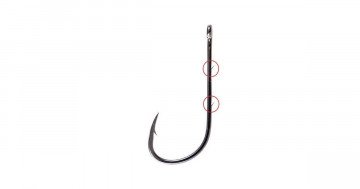
- By shank shape — straight, curved or with barbs on it.
- By shank function — what exactly it is meant to hold.
Eye shape dictates the knot. A ring eye and a spade end take different knots, and it is the feature you notice at the water, when your usual knot will not hold.
Features of intended use
The third group describes not shape but the maker's intent.
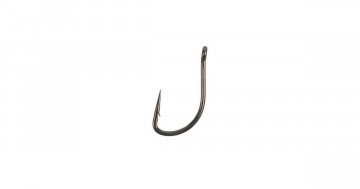
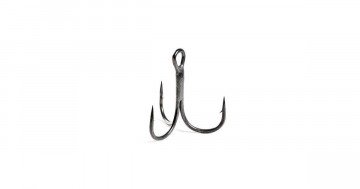
- By number of points — singles, doubles, trebles.
- By intended use — for a given method or species.
- By conditions of use — for the conditions the hook works in.
Features combine, they do not replace each other
Each feature describes a different side of the hook, so they are not interchangeable. The same hook has a bend shape, an eye angle, a point and an intended use all at once — these are not competing classifications of one object but different dimensions of it.
Hence the practical consequence: advice of the form „use this type" is almost always incomplete, because it names one feature out of nine. A hook that suits by intended use may not suit by eye shape for your knot, or by barb for the rules of the water.
How to read a hook description
In a description the features are listed one after another and look equal in weight. They are not. Look first at intended use and number of points — they rule out most of the wrong ones. Then at eye shape, because the knot depends on it. And only then at the fine features such as point shape, which show themselves in use.
The general construction of a hook is covered in Hooks. The features do not form a ranking: there is no „best" bend shape, only one suited to a particular kind of fishing. What the hook is tied with — in Fishing knots.