Fishing knots: why they hold
A knot is the only part of a setup the angler makes himself, right on the bank. Everything else can be bought ready-made; a knot is made afresh every time — and that is why it fails most often.
Every knot takes strength away
Line bends inside a knot, and at the bend the load spreads unevenly: some turns pull harder than others. So a length with a knot in it is always weaker than the same length without one — the only question is by how much.
Hence the practical conclusion: a break at the knot does not necessarily mean a badly tied knot, but normal behaviour of the setup. What is not normal is a knot that slips.
Wetting is not superstition
Pulled up dry, the turns rub against each other and the line heats and is damaged before the first cast. A wetted knot seats more evenly and holds more.
It is the detail skipped most often, and its consequences cannot be seen at the water: the setup looks intact right up to the moment it parts.
Two jobs — two groups of knots
Knots are grouped by what exactly they join, because the demands differ.
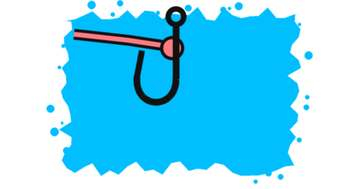
- Hook and lure knots — attach line to an eye or a spade end.
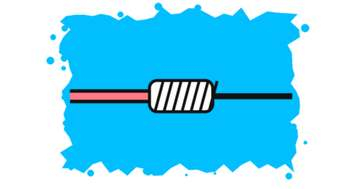
- Line-to-line knots — join two lengths together.
The main demand on the second group is passing through the guides. A bulky knot strikes a guide on the cast, and that spoils both distance and the line itself.
There is no universal knot
A knot that holds a hook well is not necessarily right for joining two lines: the first calls for security on a metal eye, the second for slimness and the ability to pass guides. So an angler needs not one knot but at least two — one from each group.
Learning ten knots at the start is unnecessary: better to make two automatic and tie them the same way every time than to know many and fumble the turns in the wind.
Checking is done before fishing, not after a break
A seated knot is looked over: the turns should lie evenly, without crossing, and the tag should not stick out sideways. Then it is loaded smoothly by hand — not to test it to destruction, but to see whether it creeps.
The knot depends on the material
The same knot behaves differently on mono, braid and fluorocarbon: slippery material wants more turns, stiff material seats less willingly. So a knot is chosen not on its own but together with the line it will be tied in.
It depends on the hook as well: a ring eye and a spade end take different knots — see Hooks. The general term is covered in What a fishing knot is.