Terminal Tackle Hardware
A swivel, a snap, a stop, a bead — parts that catch nothing themselves, but without which a rig falls apart into separate lengths of line. Each weighs a fraction of a gram, and that’s exactly why they’re the easiest to underrate: the weak link in a rig is rarely a big one.
One question splits all the hardware
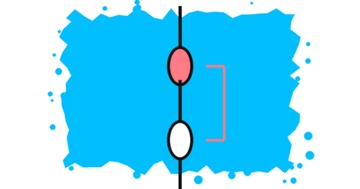
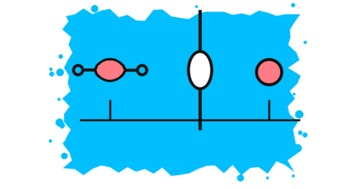
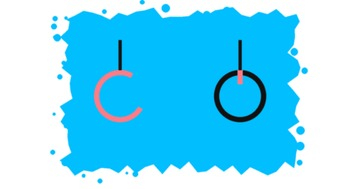
Does the part allow movement, or restrict it? A swivel and a snap with a rotating eye allow it — they remove the line twist that otherwise builds up with every turn of the lure or the fish. A stop and a bead restrict it — they fix another part’s position on the line so it can’t shift.
It’s the same divide that splits weights and floats into sliding and fixed — only here it applies not to the rig itself, but to the small parts that connect it.
Size comes as a number, not a millimetre
Hardware is marked with a number on a descending scale: the smaller the number, the bigger the part. Different makers’ scales don’t always match exactly, so the number is a guide, not a guarantee of the same size across brands.
Parts are compared by the breaking strain printed next to the number, not by the number itself: the strain rating is the one figure that means the same thing across every maker.
Material decides whether a part rusts
Coated carbon steel is the cheapest and corrodes fastest wherever the coating gets scratched — and on a small part, scratches are unavoidable. Stainless steel and titanium cost more, but a scratch alone won’t make them rust.
For sea fishing and saltwater venues, this isn’t a question of longevity but of failure at the worst possible moment: a rusted part snaps without warning, unlike worn line, which you can see.
Hardware can be a sacrificial link too
Like a weight, a cheap snap or swivel is sometimes chosen deliberately weaker than the mainline — so that on a solid snag, it’s the part that gives way, not the whole rig.
This only works if the part really is weaker, not stronger: mix up that hierarchy, and you lose the whole rig where only the snap should have parted.
What hardware doesn’t do
It doesn’t make up for a badly tied knot: if the line is tied wrong, even the best swivel is still hanging off that same weak knot. And an extra part on a rig is always an extra point where something can fail, so hardware gets added as needed, not just in case.