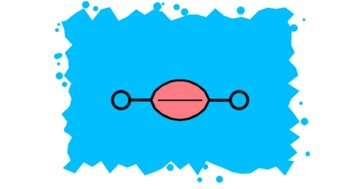
Swivels: Why Rotation Matters
A swivel is a part with two rings joined by a rotating mechanism — a barrel, a bearing, or just a free-turning pin. It has one job: let both ends of the line rotate independently, without passing twist from one side to the other.
Where twist comes from
Any lure or fish that spins also twists the line it’s tied to. Without a swivel, that twist travels the whole length of the line — right up to the reel, where the line starts laying unevenly on the spool and springs into loops on the cast.
A swivel breaks that chain: the twist is absorbed by its rotating pin, and it never reaches the reel.
Not every two-ringed part is a swivel
A plain metal figure-eight link or a ring connects two ends but doesn’t turn freely under load — twist passes straight through it with almost no resistance. A true swivel rotates precisely under the load it’s rated for, and that figure — the working load — is printed right next to the number.
So a swivel is chosen not by looks but by whether the pin actually turns by hand under a force close to its working load.
Where a swivel is unnecessary
A lure or bait that doesn’t spin on its own — a weight or a static bait — creates no twist, and a swivel there is just an extra part and an extra point of failure. It goes in where there’s an actual source of rotation, not on every rig by default.
The three-way swivel — the exception to two rings
A three-way swivel doesn’t have two rings but three: the third serves as an attachment point for a separate branch — most often a short leader carrying a weight or bait, while the mainline continues on to the lure or hook.
It’s the only type of swivel that doesn’t just join two ends but branches the rig — every other shape always has exactly two outlets.