Tip-up fishing: set them out, walk the row
Spot isn't one — there are as many as there are rigs. Presentation is a baitfish hanging on its own, without a hand. Rhythm is how fast the angler walks the round between them. Exit is when a rig has stood through several checks and told nothing.
In the three neighbouring methods the person does something with the lure. Here they do nothing with it at all: the rigs sit on the holes and fish by themselves, while the person sets them out and does the round.
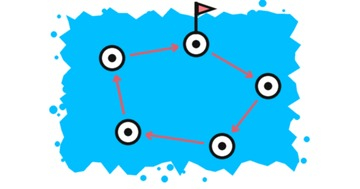
The method is setting out and doing the round
Two acts instead of a presentation. Setting out decides what area and what depths the rigs will cover. The round decides how fast the angler learns about a bite. Everything else — how the rigs themselves are built — belongs to the gear root.
With a signal, and without
A tip-up reports a bite with a flag; a flagless rig reports nothing. For the method this isn't a difference in gear but in route: with a signal, watching is enough; without one, you have to walk over and check.
Why several are set at once
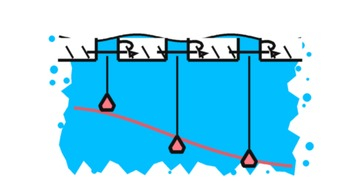
One rig is one spot and one depth. The whole point of the method is to occupy several holes at different depths and let them work while the angler is busy with something else. Here area comes from the rigs, not from movement.
When a row counts as set
When the rigs already stand at different depths on the ice and the angler can see or recall every one of them. From that moment the method stops being about setting out and becomes the round: no new holes get drilled until the row has said its piece. The first rig that fires is already an answer, and after that the row gets adjusted, not added to.
This method is paired with an active one
That's what usually happens: the rigs sit while the angler fishes an ice jig on the hole next door, keeping half an eye on the flags. A tip-up is convenient exactly because it doesn't tie up the hands.
Why rigs aren't moved every minute
Every move means a new hole, a new depth, and time when that rig isn't fishing at all. So a row gets adjusted gradually: first look at what the rigs that fired have in common, only then move the farthest ones. This method wins by patience — the opposite of spoon fishing, where a spot gets left after a few cycles with no answer.
What it costs
Attention. The rigs have to be held in sight or in mind, and the more there are, the higher the chance that one stands with an empty hook until the end of the day. What a signal-less rig itself costs is covered in the gear root; the method's own cost is different: it occupies your head while your hands are busy with something else.