Ice fishing: the hole sets the spot
In summer an angler changes spot with a cast, in a second, without even standing up. In winter the hole sets the spot, and moving the presentation even a little to the side means drilling a new one.
What ice changes
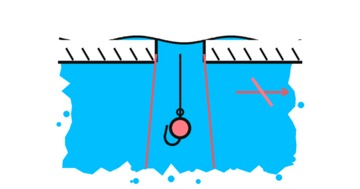
Two things, both fundamental. First: there is no horizontal — the lure only travels up and down, in a narrow column under the opening. Second: changing spot costs work, not a flick of the wrist. Everything else about ice methods follows from these two.
The spot is chosen before the lure goes in
In summer you can cast blind and check a spot with a retrieve. Here that doesn't work: you drill first, and only then see what's under the ice. So an ice method starts with the decision of exactly where to make the hole — and that decision matters more than the choice of lure.
Four methods in this branch
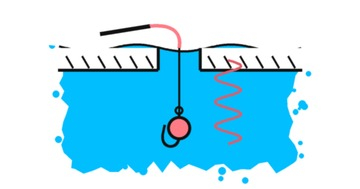
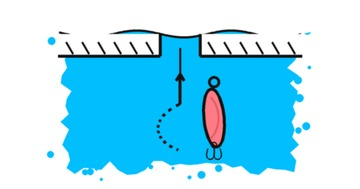
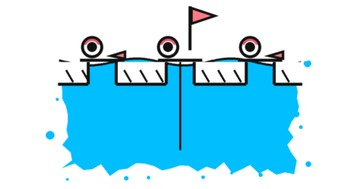
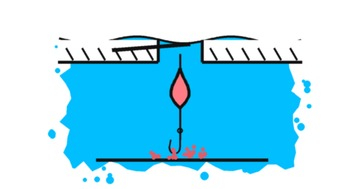
Ice jig fishing — a rhythm set by the hand through a spring bobber. Ice spoon fishing — a lift and a pause the lure falls through on its own. Tip-up fishing — the gear fishes without a person. Float fishing — a motionless presentation on one hole.
Active and passive — two opposite answers
The same question — how to cover more water — gets two answers. Active: the angler walks from hole to hole and presents the lure everywhere. Passive: rigs sit on several holes while the angler does the round and watches for a signal. Both are about the same thing — how much area you manage to check.
Why speed of moving between holes decides everything
The next hole often gives a completely different result from the one you just left — anyone who has drilled a line of them has seen it. So the day is won by how fast you cycle through spots, and how you work the lure only matters once you've found one. That's the reason for a series of holes in spoon fishing, and for setting several tip-ups at once.
What it shares with vertical jigging in summer
The presentation itself. What the hand does jigging straight down from a boat in summer, it does over a hole too: the difference isn't in the lure — it's in how you change spot. From a boat that's an oar, on ice it's an auger, and that's where the whole difference in tactics comes from, given the same movement of the hand.
The auger decides more than it seems to
Here the auger changes the spot. It's the only thing that does, which is why an angler counts holes the way they'd count casts in summer. While a new hole comes easy, they drill freely and move on at the first sign of quiet. Once each hole is costly, a person starts lingering where they should have moved on long ago — and that's the main mistake across the whole branch, common to all four methods.
Ice safety is a separate topic
It doesn't depend on the method and doesn't change whether you're presenting an ice jig or setting a rig. So this branch leaves it out entirely: no signs, no standards, no numbers. A fishing method doesn't make ice any stronger.