Soft plastic lures: shape and material
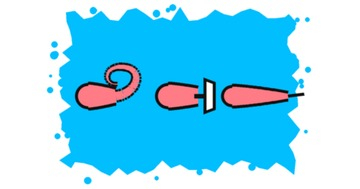
A soft plastic lure differs from the rest in two things, and both come from the material: it weighs almost nothing and has no hook of its own. The weight, the hook and the depth it runs at are given to it by the rig, not by the lure itself.
This section splits into shape and material
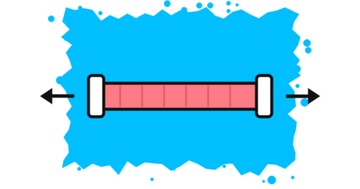
Shape is responsible for how the lure moves: a curly tail, a paddle, a ribbed body are not decoration but a way to turn an even pull of the line into an uneven action. Material is responsible for how it behaves out of the water: how soft it is, how long it lasts, how it should be stored.
It is the same split that divides sinkers into sliding and fixed: first the question "how does it work in the water", then "what is it made of". From here the section continues into shapes and material.
A lure with no weight and no hook
Soft plastic barely sinks on its own: in water it is close to neutral buoyancy and, without extra weight, stays in the upper layer. That is why it is always used together with something else — a jig head, a separate sinker or a weighted hook.
Choosing the rig matters here as much as choosing the lure: the same curly tail grub on a heavy jig head works the bottom with a hop-and-drop retrieve, while on a light hook it glides slowly through the water column.
There are also rigs where the weight never touches the lure at all and sits separately, above or below it on the line. In these the lure carries no lead and moves more freely, but the depth it runs at is set not by the lure but by the length of the leader between it and the weight.
The hook hides in the body or stays exposed
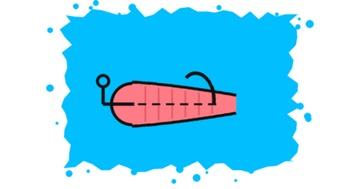
A soft lure has something a hard one does not: the hook can be hidden inside it. An offset hook has its point tucked back into the body, and the lure then passes through weed and branches; on a jig head the hook stays exposed and hooks up more reliably, but also snags on everything it touches.
Hiding the point is not possible in every shape: the body has to be thick enough for the hook to disappear into it completely. Thin lures do not allow this, and in snaggy spots the choice of shape becomes a question of getting through cover, not of action.
Why soft plastics are counted by the dozen
This is the only class of lure that is a consumable: pike teeth cut off the tail, and the hook gradually tears the body apart over repeated casts. A box of soft plastics is used up in a season, while a hardbait lasts for years — and that is built into the very idea of a soft lure, not a sign of poor quality.
What soft plastic does not do
It does not hold its shape forever: a lure left bent in a box stays bent, and its action will be crooked. It does not work without a rig — on its own it is just a piece of plastic with no weight. And it does not forgive crooked rigging: a hook off by a few millimetres makes the lure spin around its axis instead of working.