Other ice lures: outside the classes
The section's three classes split by who creates the movement. But vertical fishing also uses things that don't fit that trio: a lure with no action of its own, a lure rigged differently, and an ordinary summer lure worked straight up and down.
What belongs here
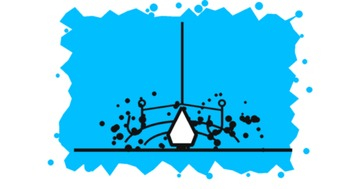
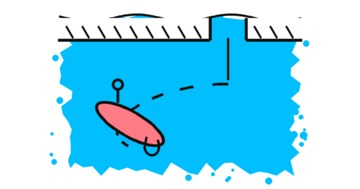
Balda isn't a lure in the usual sense: it's a sinker and two loose hooks, and what catches fish isn't the metal but a cloud of stirred-up silt. Bokoplav has a body, but it hangs at an angle and swings out sideways farther than a jigging minnow. Summer lures have nothing winter about them — they just tolerate being worked vertically.
Why these aren't separate classes
With a jigging minnow, a jigging spoon, and an ice jig, the difference is where the movement comes from. Here there's no such difference: balda works off the bottom, bokoplav off the angle of its rigging, a summer lure off its own weight. There's no shared mechanism that would let you split them further, which is why they're grouped together instead of getting their own branches.
What they share
All three are fished straight down under one spot, and all three need slack line after the lift and a pause at the bottom. In other words the hand works the same way as with a jigging minnow or a jigging spoon — only what answers the fish on that move changes.
Where they don't reach
Balda is tied to the bottom and doesn't work anywhere in the water column. Bokoplav needs room off to the side of the hole — in shallow water under the ice it feels cramped. Summer lures are heavier than winter ones and often lose to an ice jig on passive fish.
The order to try them in
The first one down is whichever answers “is there an active fish here” fastest — a summer lure fished vertically. Balda goes second, once it's clear the fish is holding near the bottom. Bokoplav goes last, because it works wide and each cycle takes time.
A shared weakness — the hooks
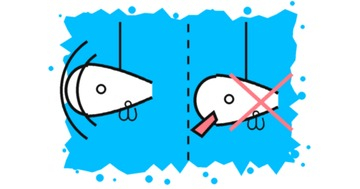
On balda the hooks hang loose, a summer lure often has two of them — both trebles — and on bokoplav the point sticks out sideways from the body. All of that catches the line on a sharp lift more often than the single hook on an ice jig. That's why the lift is kept short here, and after every snag the lure gets pulled up to check how it's hanging.
What isn't here
Tip-ups with a flag, flagless tip-ups, and a winter float aren't here — those are rigs, not lures, and what catches fish on them is a livebait or a bait. There aren't any homemade builds without an established name either: this covers what you can recognize in a winter tackle box, not everything that exists.