Ice jigs: the hand gives the action
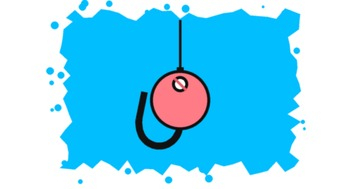
An ice jig is a hook soldered into a small body of heavy metal. It's the only class in this section with no action of its own at all: the lure just repeats the movement of your hand and adds nothing.
The spring bobber gives it action, not the lure
Between the hand and the lure sits the spring bobber — a springy tip at the end of the winter rod. It turns the smallest tremor of the hand into a steady quiver of the lure and, at the same time, shows the bite. An ice jig without a spring bobber is just a weighted hook.
Why it needs weight
The weight here isn't for casting distance or a fast sink — it's to straighten a thin line and carry the spring bobber's movement down to the lure. That's why an ice jig is the smallest of all artificial lures, and also why it only works on thin monofilament line: a thick one won't let a light lure straighten it under its own weight.
Two schools
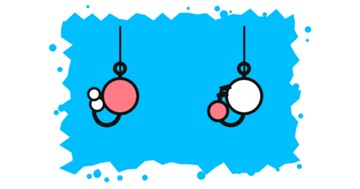
Baited and bare aren't two versions of the same style of fishing — they're two different ways of holding a fish's interest: smell and taste in one, nothing but the frequency of the quiver in the other. The lures themselves differ in shape and tie point too.
The material decides the size
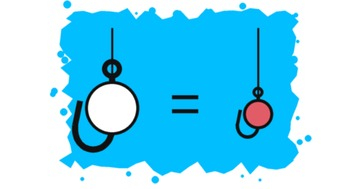
At the same weight, a denser metal gives a smaller lure. That's the whole practical difference between a lead and a tungsten ice jig — covered in a separate card.
It isn't a jig head
On a jig head, the body is just weight, and the lure is the soft plastic threaded onto the hook. An ice jig is the opposite: the body is the lure, and everything else is added to it. They look alike; by design they're opposites.
What limits the class
Current sweeps a light lure away, and it can't reach real depth: by the time it gets to the bottom, the line has already bowed into a curve. So in current or at real depth, anglers either weight up an ice jig or switch to a jigging spoon. In still water, none of that applies.
Why there are dozens in the box
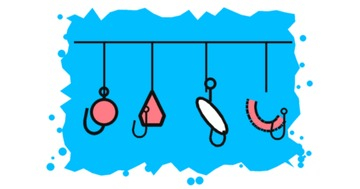
An ice jig can't be taken apart — you can't change its hook, its weight or its shape. Every combination of weight, shape and tie point is a separate lure, which is exactly why anglers carry sets of them, kept in a box lined with foam or fitted with a magnet so the points don't dull against each other.
Who it's for
An ice jig catches both silverfish and perch — anything that picks small prey off the bottom. Where you need to search an area under the hole or reach an active predator, a jigging minnow or a jigging spoon does the job.