Spoons: a plate with no shaft
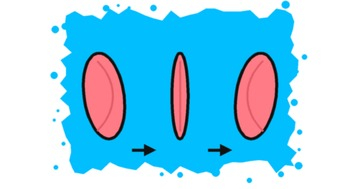
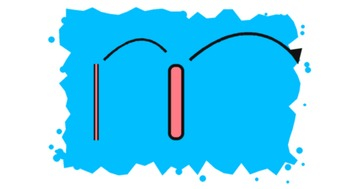
A spoon is a curved metal plate with no shaft and no moving parts. It doesn’t spin — it rocks from side to side, drifting sideways off the straight line of the retrieve as it does.
Where the action comes from
The curve makes the plate asymmetric: the current pushes harder on the concave side than on the convex one, the plate turns, presents the other side — and the cycle repeats. More on this in why it wobbles.
It works even without a retrieve
On the pause a spoon doesn’t just sink — it glides, still rocking as it falls. This is the main difference from a spinner: a spinner is dead without forward motion, while a spoon does half its work on the free fall.
Thickness instead of shape
A spoon has neither a blade nor a lip — everything is decided by the profile and the thickness of the metal. A thin plate rocks widely and sinks slowly, a thick one runs narrower and faster but casts noticeably further.
The hook is mounted differently from model to model
The treble hook hangs from a split ring at the tail, and on some models a single hook is soldered in place. A rigid mount tangles less on the cast, a hanging one is more forgiving of a jerk when a fish tries to throw the hook. Both versions exist on the same model in different lines, and the choice between them is a choice between snag resistance and hook-up reliability.
Profile matters as much as the curve
A narrow, long plate rocks often and shallowly, a wide, short one rocks less often and more widely. Together with the curve, the profile sets the same action that a lip or a tail sets on other lures.
Some models get through weed
On some spoons the hook isn’t hung on a ring but soldered in place, with a wire guard covering it from above. A spoon like this gets through stems and branches that an ordinary one would foul on the first cast. The trade-off is a worse hook-up: the guard sits exactly where the hook would otherwise catch, and some takes come up empty.
It’s used through the ice too
The same plate works in vertical presentation: you lift it and let it drop, and it works on the fall. That’s possible precisely because the action doesn’t need forward motion — a spinner has no such mode at all: without forward motion its blade just sits still.
What not to expect from it
A steady, continuous signal — that comes from spinning, not rocking. And a fixed depth: a spoon runs deeper the slower you retrieve it, and depth is set by the angler, not the lure. That’s why the same model can be worked near the surface or along the bottom — it’s a matter of pace, not of swapping lures.