Fishing line: three materials
Line is the only part of a setup that connects angler and fish directly. Rod and reel work with it at one remove; it carries the whole load, and it is what breaks.
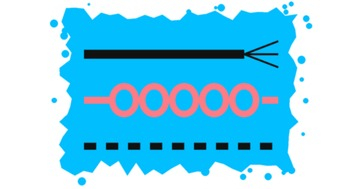
Three materials, three different behaviours
The choice here is not between dearer and cheaper but between three materials with different properties. Each wins at one thing and loses at the rest.
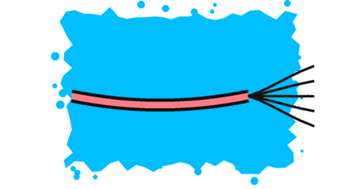
- Monofilament line — stretches, and that softens sudden loads.
- Braided line — barely stretches, so it passes on everything the lure does.
- Fluorocarbon — least visible underwater, which is why it serves as leader.
- Leader material — a separate group for when the leader has to survive teeth.
Stretch decides more than strength
Stretch is the main property separating the materials. A line that stretches cushions a fish's run and forgives a hard strike, but hides small touches from the angler. A non-stretch line does the opposite: it passes every contact into your hand but forgives nothing — the load goes straight to knot and hook.
So the same material can be right and wrong on the same water, depending on whether you are fishing static or on the move.
Diameter and strength are not the same thing
Two lines of the same diameter can hold different loads, and two of the same strength can differ in thickness. Diameter describes how visible the line is and how much the current pushes on it; strength describes what it will take.
Confusing them is expensive: the setup ends up heavier than it needs to be, costing both distance and bites. Compare like with like, not one figure on one packet against another.
Materials are combined, not set against each other
In practice a setup often uses two materials: one main line, a leader of another. That is done when you need properties no single material has at once — sensitivity in the main line, invisibility at the business end.
The join becomes the weakest point, which is exactly why line-to-line knots have their own subcategory in Fishing knots.
Line deteriorates without being fished
That is what sets it apart from the rest of your gear. A rod or reel sits for years unchanged, but line ages on its own: from light, heat and damp. Materials age differently, and the one that is cheaper to buy is not always cheaper across a season.
Storage is covered in Line care and storage.
Where to start choosing
Method first, then material, and only then diameter. The reverse order is the commonest mistake: diameter gets taken „with a margin", the setup grows coarser than it needs to be and casting distance drops. General terms — in What fishing line is and How to choose line.