Line-to-line knots
These knots join two lengths of line to each other — most often a main line to a leader. The job is harder than tying on a hook: there is no metal eye to grip, and the materials on either side are often different.
The main demand is passing the guides
The join ends up in the working part of the setup and flies through every guide on the rod at each cast. A bulky knot strikes the guide, checks the line and spoils both the cast and the braid itself.
So knots in this group are judged not by strength alone but by how slim and smooth they are. A knot that holds perfectly but stands proud is no good here.
Three knots, three trade-offs
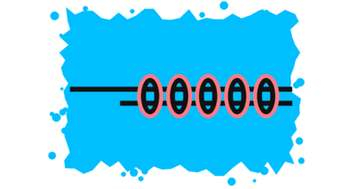
- Uni, in its double form — simple, quick to tie, all-purpose.
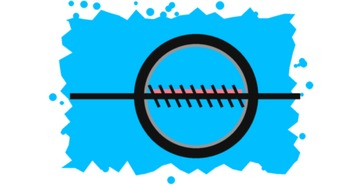
- FG — the slimmest of the common ones, holding on friction between turns.
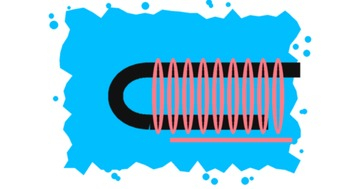
- Albright — joins materials of very different diameters.
Friction against tightening
Knots in this group hold in two different ways. Some pull down and are secured by that tightening. Others, like the FG, hold by turns that grip the second line and work on friction.
The second way gives the slimmest join but asks for care: too few turns or uneven wrapping and the knot creeps under load without breaking. A creeping knot is more dangerous than one that breaks: it gives no warning until it slides off altogether.
Bring one knot to automatic
These knots take longer to tie than hook knots, and it has to be done on the bank, often in wind and with wet hands. Knowing three and fumbling all of them is worse than knowing one and tying it the same way every time.
You learn the second knot when the first stops suiting — when the two diameters have grown too far apart, for instance.
Different materials on either side
Most often this knot joins braid to fluorocarbon — slippery to stiff. The knot has to account for both properties at once, and that is why joining knots are harder than hook knots.
Where the diameters differ sharply, all-purpose knots do worse — that is what the Albright is for.
What to check after tying
The turns should lie evenly and tightly, without crossing; the tags are trimmed short but not flush. Then the knot is loaded smoothly — not to breaking point, but to see whether it moves.
Rules common to all knots are in Fishing knots, and attaching to a hook in the neighbouring subcategory Hook and lure knots.