Braided line: feel without stretch
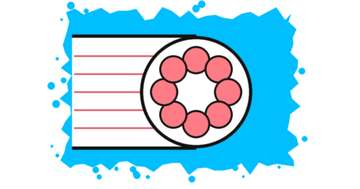
Braided line is not drawn as a single filament like mono; it is woven from several fibres into one plait. Its main property, and everything that follows from it, comes from that.
The main point: it barely stretches
No stretch means the movement of the lure and the movement of the rod tip happen almost at the same instant. The angler feels the bottom, weed, a cautious touch — everything monofilament absorbs in its own stretch.
The same property works against you. No stretch means no cushioning: a hard strike or a big fish's run hits the knot, the hook and the drag directly, because nothing is there to soak it up.
What it costs
Braid is more visible underwater than fluorocarbon, so in clear water it is finished with a leader of another material. It takes abrasion on stones and shell beds worse than its strength rating suggests: the fibres wear away from the surface.
Another point — braid holds knots less well than monofilament. The material is slippery, and some familiar knots slip on it.
So braid almost always needs a leader
A leader solves two things at once: it makes the business end less visible and adds the cushioning braid lacks. This is not a refinement but the ordinary way a setup is built — and it is why knots that join two materials are needed at all.
They are gathered in Line-to-line knots. The knot has to be slim here, because it passes through the rod guides on every cast.
Braids differ more than you would think
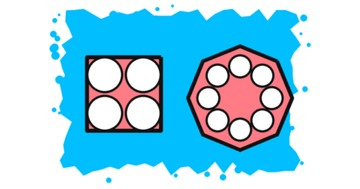
Braid is woven from different numbers of fibres, and that changes how it behaves. The more fibres, the rounder the cross-section: such a braid runs more smoothly through guides, hisses less and picks up less weed. Flatter braids are cheaper and stiffer.
So „braid" is not one material but a family, and two with the same stated breaking strain can lay differently on the spool and wear differently. Compare particular braids, not the material in general.
Where braid belongs and where it does not
It belongs where feeling and steering the lure matter: in spinning, at long range where mono's stretch eats the strike, and where fish have to be pulled out of weed.
It does worse where you fish static on fine tackle: sensitivity is not needed there, while stiffness and visibility get in the way.
What is in this subcategory
Construction and properties are covered in What braided line is. Comparison with the other materials — in Fishing line, storage — in Line care and storage.