Fluorocarbon: hard to see underwater
Fluorocarbon is made from polyvinylidene fluoride, and one optical property sets it apart from every other material — the property it is bought for.
Why it is hard to see in water
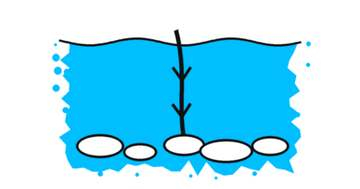
It is not about clarity: clear mono is clear too. It is about refractive index — how much the material bends light. Fluorocarbon's is close to that of water itself, so the boundary between line and water blurs to the eye.
This works underwater only. In air fluorocarbon is no less visible than any other line, which is exactly why comparing materials while holding them in your hand tells you nothing.
So it is almost always a leader
Invisibility is needed where the line sits next to the lure, that is on the last stretch. The fish never sees the rest of the length, and paying for it with fluorocarbon's properties makes no sense.
Hence the usual arrangement: one main line, a fluorocarbon leader. The knot between them comes from Line-to-line knots.
It is stiffer and it sinks
Fluorocarbon is noticeably stiffer than monofilament, which has two consequences at once. First, it lies less well on a spool and holds its shape more, so it is used as main line less often. Second, a stiff leader keeps its form better and tangles less around the lure.
Fluorocarbon also sinks faster than mono, and when fishing on the bottom that is an advantage: the rig settles sooner, is pushed less by the current, and the leader does not lift off the bottom where the bait is meant to lie.
Pure fluorocarbon and coated line
Besides solid fluorocarbon you will meet ordinary line with a fluorocarbon coating. These are different things: the coating gives part of the optical effect, but the material behaves like the core the strand is made of.
Judging by the name on the packet is unwise here — what matters is whether it is solid material or a skin. Stiffness, abrasion resistance and which knots will hold all depend on that.
Abrasion resistance
That is the second reason it is used as a leader. The material takes contact with stones, shell beds and sunken timber better than braid — which is precisely what the business end meets most often.
It is no protection against teeth: where a pike has to be allowed for, another material goes on — see Leader material.
What is in this subcategory
The material's properties are covered in What fluorocarbon is. Comparison with the rest — in Fishing line.