Ice rigs under the hole
With ice fishing lures, the whole point is movement — given either by the hand through the spring bobber or by the lure itself on the drop. Here there's none of that at all: the bait sits motionless, and the rig works simply by being in the right place.
Two rigs in this section
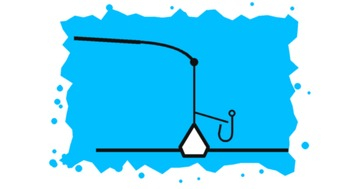
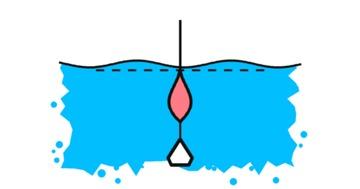
The ice bottom rig lays the sinker on the bottom and leaves the leader above it. The winter float shows the bite instead of a spring bobber, and for that it's deliberately set below the surface.
What they have in common
Neither needs the hand to work it, and that removes the main limit of vertical presentation. The angler can watch several holes at once instead of just the one where the ice jig hangs.
What shows the bite
A spring bobber, or the float itself, depending on the rig. The signal here is passive and needs no hand movement, but it can't be seen from a distance — neither the spring bobber nor a float sunk below the surface. So these holes aren't spread out across the ice like tip-ups, they're drilled close together — a few steps apart — so every signal stays in view from one spot.
How many holes are kept going
The exact number is set by the rules in force, and they differ by region. The second limit is a practical one: as many as can be seen from where the angler sits, and as many as can be reached while the bait on the first is still fresh and the hole hasn't frozen over.
What it costs
Time. A motionless rig doesn't allow a hookset at the right moment: by the time the angler gets there and picks up the rod, the fish has either hooked itself or already let go. What it buys in return is working while he drills the next hole.
How a winter sit-and-wait rig differs from one in open water
In open water, a bottom rig on a rest fishes the same way, sitting still. The ice changes not the principle but the spot: the rig stays wherever the hole was drilled, and several holes side by side give several spots at once — without a boat and without a cast.
What they are not
This isn't a tip-up: there, a baitfish does the fishing and there's a signal visible from a distance. Here there's neither baitfish nor a signal visible from far off: the spring bobber and the float only read up close.
Where they don't work
On a strong current, where anything short of a heavy sinker gets swept away, and in shallow water, where a long leader doesn't fit and the rig has to be shortened to a single bait above the sinker.