Lure colour, finish and sound
Three branches of this root — soft plastics, hardbaits and metal lures — split lures by how they’re built. This section splits them differently: by the channel a lure uses to reach the fish.
Three channels, not three types
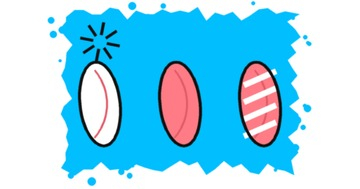
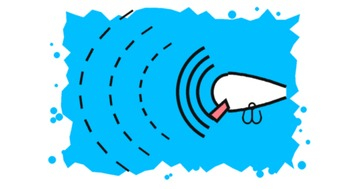
The first channel is the lure’s own body colour, which the fish sees with its eyes. The second is flashes of light reflected off the surface. The third is vibrations that spread out from the lure in every direction. The channels work independently and switch off in different conditions, so a lure strong in one of them doesn’t necessarily have the other two.
Why this section cuts across the others
A brass spoon, a white paddle tail and a minnow with a sound chamber are built quite differently, yet the channels in them are the same. The rule about colour in murky water is identical for all three, and writing it three times in three branches would mean three near-identical texts — exactly what we avoid.
The order in which the channels switch off
Reflected light goes first: with no sun or sky, there’s nothing to reflect. Own colour goes second: at depth and in murky water the spectrum is cut, and only a silhouette is left of the lure. Vibration outlasts both and switches off only once the lure stops moving.
The channels don’t add up
A lure with all three isn’t three times better than a plain metal lure. In a given water at a given hour, one or two channels work and the rest add nothing. You don’t pick a lure to have everything — you pick the one channel still alive in that water.
The one thing chosen apart from the action
You can’t change shape or weight without changing the lure’s action — that’s a different lure already. Colour, finish and a sound chamber, on the other hand, set the signal without touching the action. That’s why they’re gathered in a section of their own: it really is a separate choice.
The lure isn’t the only thing in frame
The fish sees and hears everything that travels with the lure: the leader and snap in clear water, the rattle of a swivel, a boat’s shadow, a sinker hitting the water. It’s the same set of channels, only the source of the signal is different — and the angler affects it too.
What can actually be checked here
The order in which water eats colours; the distance an object is visible in a given water; how long a glow pigment’s afterglow lasts; the range at which the lateral line works. These are measurable things, and the cards name them for what they are, with the limits of where they apply.
What isn’t here
There’s no answer to which colour catches fish. Fishing literature doesn’t have one either: what works in one water fails in the next, and we have no reproducible study to back a rule. So we write about conditions, not recipes.