Ice Safety: Ice Isn't Uniform
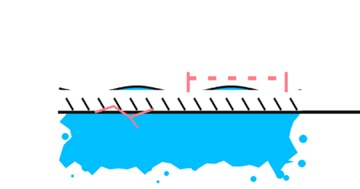
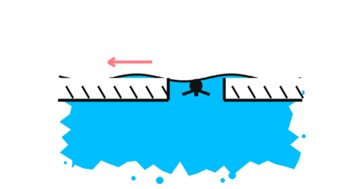
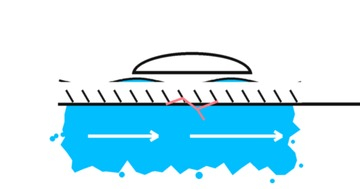
In the section on ice fishing, ice is a point set by the hole. Here it's something else: a load-bearing structure that may not hold. The same ice on the same body of water can hold differently, and the difference can be a few steps away.
Why This Section Has No Thickness Numbers
Because the figure that does exist is national. Ukraine's State Emergency Service gives none at all and writes, instead of a number: "it is forbidden to go out onto ice whose thickness and strength are unknown to you". Germany's DLRG, by contrast, does publish its own standard — and it's a German one, for German waters. One card is read in eight languages, and someone else's national standard stops being a standard in it.
What's Wrong With the Number Itself
It measures the wrong thing. Clear river ice and white ice hold differently at the same thickness; current, a blanket of snow, a thaw, and how weight is distributed all change strength without changing thickness. A figure pulled out of that context reads as permission, and that's exactly why it gets copied from one text to another more readily than anything else.
What the Section Covers
Four parts. What makes ice dangerous — the physics: what strength actually depends on. Signs — where the ice is thinner and when it's weaker, what's visible to the eye. Gear — what shortens the time spent in the water. And falling through the ice — the protocol for action in the water, both for the person who fell through and for the person nearby.
What This Section Doesn't Have, and Won't
A countdown. The "one minute, ten minutes, one hour" mnemonic circulates in fishing texts as fact, but it's been debunked with a reference to a book by its own author: the ability to move fades gradually, it doesn't cut off at the tenth minute. It gives a sense of time in reserve that doesn't exist.
What to Do With This Section
The section is read before heading out, not after. And it doesn't replace the service: requirements, bans, and local warnings are issued separately by each country's rescue service, and each service has its own number — one to know in advance, not to look up at the moment it's needed.