Feeder rods: the tip as bite indicator
Feeder fishing is bottom fishing with a feeder, and its rod has one feature no other type has: an interchangeable tip. It is the tip, not the angler's hand, that notices the bite.
The quivertip is a tool in itself
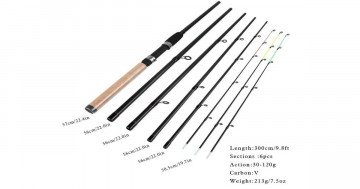
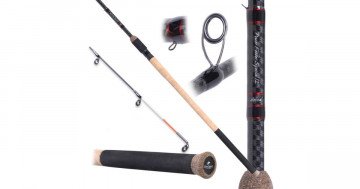
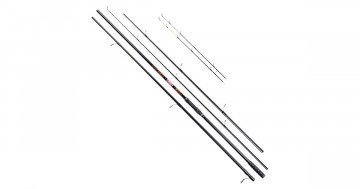
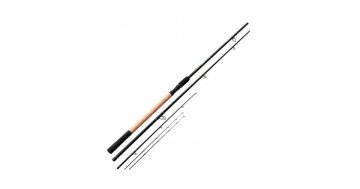
The end of a feeder blank is made deliberately soft and usually removable: several tips of different stiffness come with the rod. The angler fits the one that will bend under the current and the weight of the feeder just far enough to leave room for the bite itself.
Too stiff a tip will not show a cautious bite; too soft a one bends under the current and shows nothing either. Matching the tip to conditions is the main skill in feeder fishing, and it is done at the water, not in the shop.
The feeder sets the rating
In feeder fishing the blank is loaded not by the bait but by the feeder with groundbait in it, and it is that weight which must fall inside the rating. This is why feeder ratings are not compared directly with spinning ones: there the weight is the lure, here it is a loaded feeder, and the numbers mean different things.
Covered in Feeder rod ratings.
How a feeder differs from plain ledgering
Bottom fishing existed before the feeder, but without an interchangeable tip the indicator was something external — a bell or a clip on the line. The feeder moved that job into the rod itself, and that brought precision: the blank shows not just that a bite happened but what kind it was.
The second difference is that the bait is built into the rig. The feeder delivers groundbait exactly where the rig lands, and every new cast refreshes the baited spot.
Length here is about distance and line control
A longer feeder casts further and lifts more line clear of the water, taking the current's pressure off it. A shorter one is more accurate and easier on a tight bank. It is the same trade-off as elsewhere, but on a river you feel it more sharply. Details in Feeder rod length.
Rod, feeder and rig are one set
Feeder fishing does not tolerate being assembled piecemeal. The feeder's weight must sit inside the blank's rating, the tip stiffness must suit both the current and that same weight, and the line must take the load of casting a loaded feeder, which is noticeably higher than playing a fish.
The commonest break in feeder fishing happens not on a fish but on the cast: the sharp start of a heavy feeder loads the setup more than anything else. That is why the knot and the last stretch of line get special attention here.
Common mistakes when choosing
The first is owning one tip and fishing it everywhere: on a river it bends and hides the bite, in still water it will not show a soft one. The second is comparing feeder and spinning by the rating figure, forgetting that they measure different things. The third is buying a rod for a venue rather than for a distance and a current, which vary from swim to swim on the same venue.
What is in this subcategory
Separate articles cover the term itself, construction, action, material and history. Features common to all types — in Fishing rods.